
We remember the route from home to school because we walk it every day. We remember a recipe because we’ve cooked it ourselves. Learning works the same way; when students do something on their own, it stays with them longer.
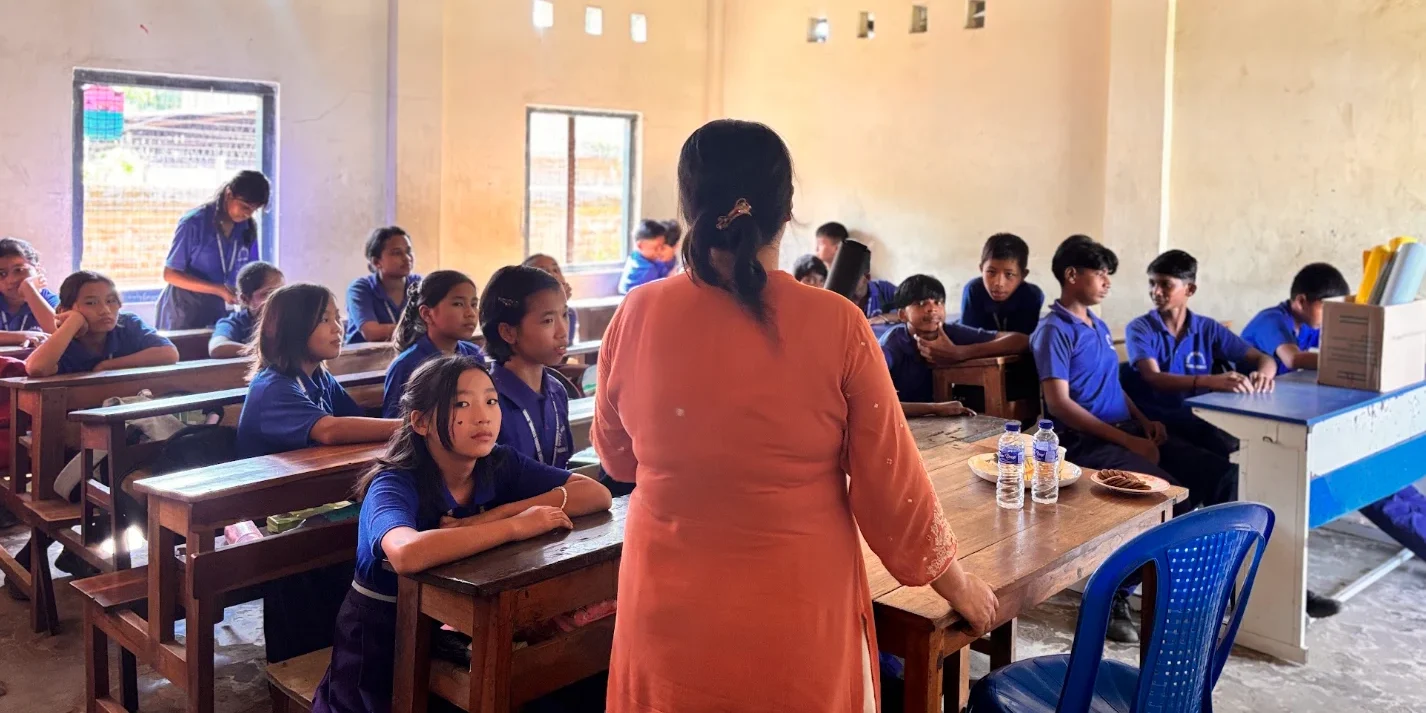
During a conversation with a teacher at a government school in Dimapur, I learned that many students in Grades 4 and 5 live away from their families so they can continue their education.
Most of them stay with relatives or in hostels. Since they cannot contribute financially, they often help by taking on household chores before and after school. By the time they reach the classroom, many have already spent part of their day helping at home.
Teachers see how this affects learning. Keeping students engaged requires more time and attention, especially when classrooms depend mainly on memorisation and repetition. This is visible in the tired faces of children who travel long distances and still try their best to keep up.
To make learning more connected and engaging, the Department of School Education, Nagaland, in collaboration with Education Above All (EAA), Mantra4Change, Shikshalokam, and NagaEd, introduced Project-Based Learning (PBL) in government schools. The approach encourages students to learn by doing, connecting lessons to real-life experiences, their surroundings, and their culture.
Learning by Doing
With Project-Based Learning, classrooms are becoming engaging, and teacher-student interaction is improving. Students now learn by doing. Instead of just reading lessons from books, they work on small projects, discuss with their classmates, and understand the topic in their own way with their teacher’s support.
In one classroom, students read a story in their English textbook and were then asked to write a new one using the same characters. They planned it together, wrote it on chart paper, and acted it out right there in class.
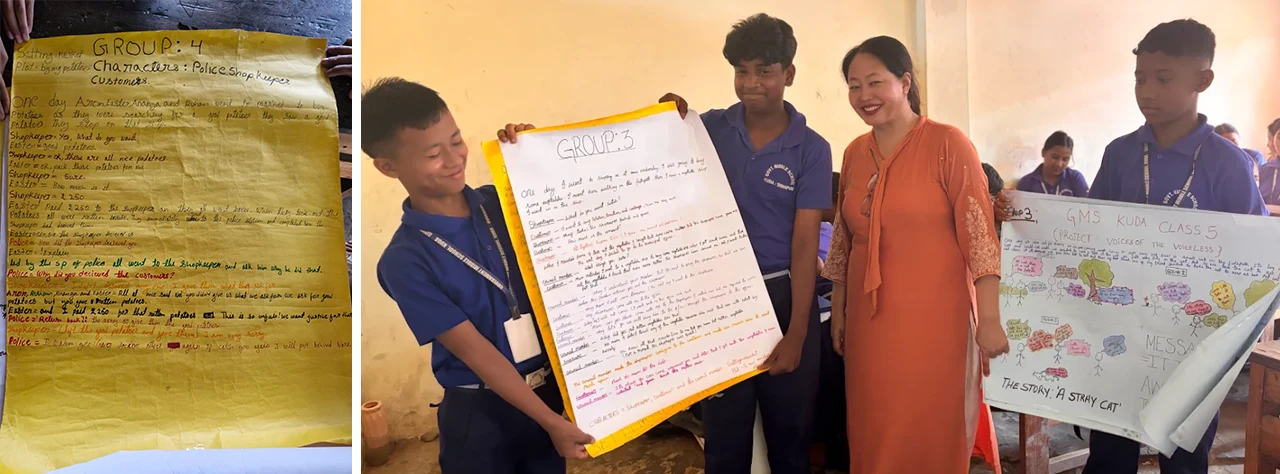
Their story was about a few friends buying potatoes from a shopkeeper who tricks them, and how a police officer solves the problem. The students wrote each dialogue by hand and played out every role, customers, shopkeeper, and police. The classroom filled with laughter as they performed their parts with full energy.
That simple activity became a turning point; it showed them that learning can be understood, discussed, and created together.
Finding Strengths in Each Other
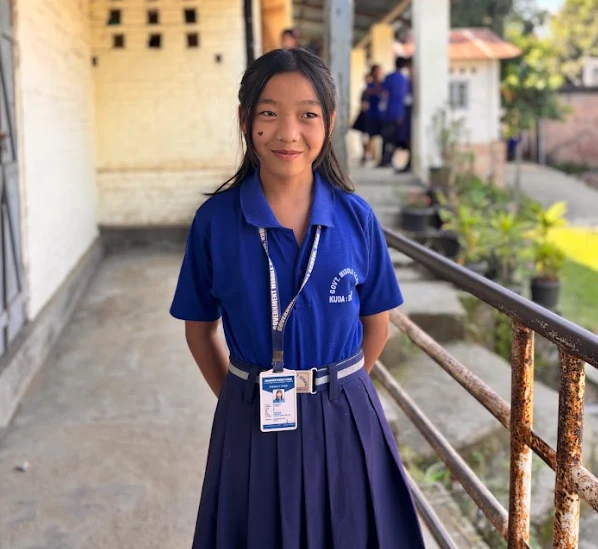
Among these students is Khumtila, who enrolled in this government school after transferring from a private school. Her English was stronger than that of many of her classmates, and her teacher, Ms. Lolia, saw this as an opportunity.
“I include her with students who are not confident in English,” says Ms. Lolia. “That way, they learn from each other. Some students are good at speaking, others at drawing or explaining. Everyone brings something.”
Her mathematics teacher, Ms. Thejaseno, feels the same.
“When students make projects together, they exchange ideas and skills. I mix the hyperactive ones with the shy ones. It helps them work as a team.”
One of the classroom projects — ‘Shawls of Identity’ — helped students learn fractions through traditional shawl patterns. They drew shawls, divided them into different shapes, and coloured each part to understand fractions visually. The project was later selected for the PBL fair, a state-level showcase celebrating student work.
Many Dreams, One Classroom
During the English project, Khumtila played the role of the police officer. When asked what she wants to become, she laughed and said,
“A makeup artist — to make everyone beautiful.
A police — to beat the thief.
A singer or dancer — maybe a K-pop artist!”
She also knows a few Korean words, including ‘Khamsahabnida’, which means ‘thank you’.
In another project, she created jewelry using paper and cardboard, learning about shapes through design. “At first, it was scary because we didn’t know how to make projects,” she said. “But teachers helped us. Next time, I want to use origami to make better designs.”
Her groupmates: Pongkhom, Petsula, Thango, and others, often share the same enthusiasm. They support each other while working, discuss ideas, and help their friends who find it difficult to understand.
A New Way of Seeing Learning
In classrooms where students come from different tribes and backgrounds, PBL has helped them connect and work together. They try to understand each other better and learn together at their own pace.
Teachers see that students are more willing to speak up, ask questions, and express their ideas. They’re not afraid of getting things wrong anymore. They’re curious. They’re engaged.
That’s what learning looks like now. It’s no longer about finishing lessons quickly, it’s about understanding the concepts and helping one another improve. What this shows is clear, when students learn through experience, lessons stay with them and classrooms become more engaging places to learn.