

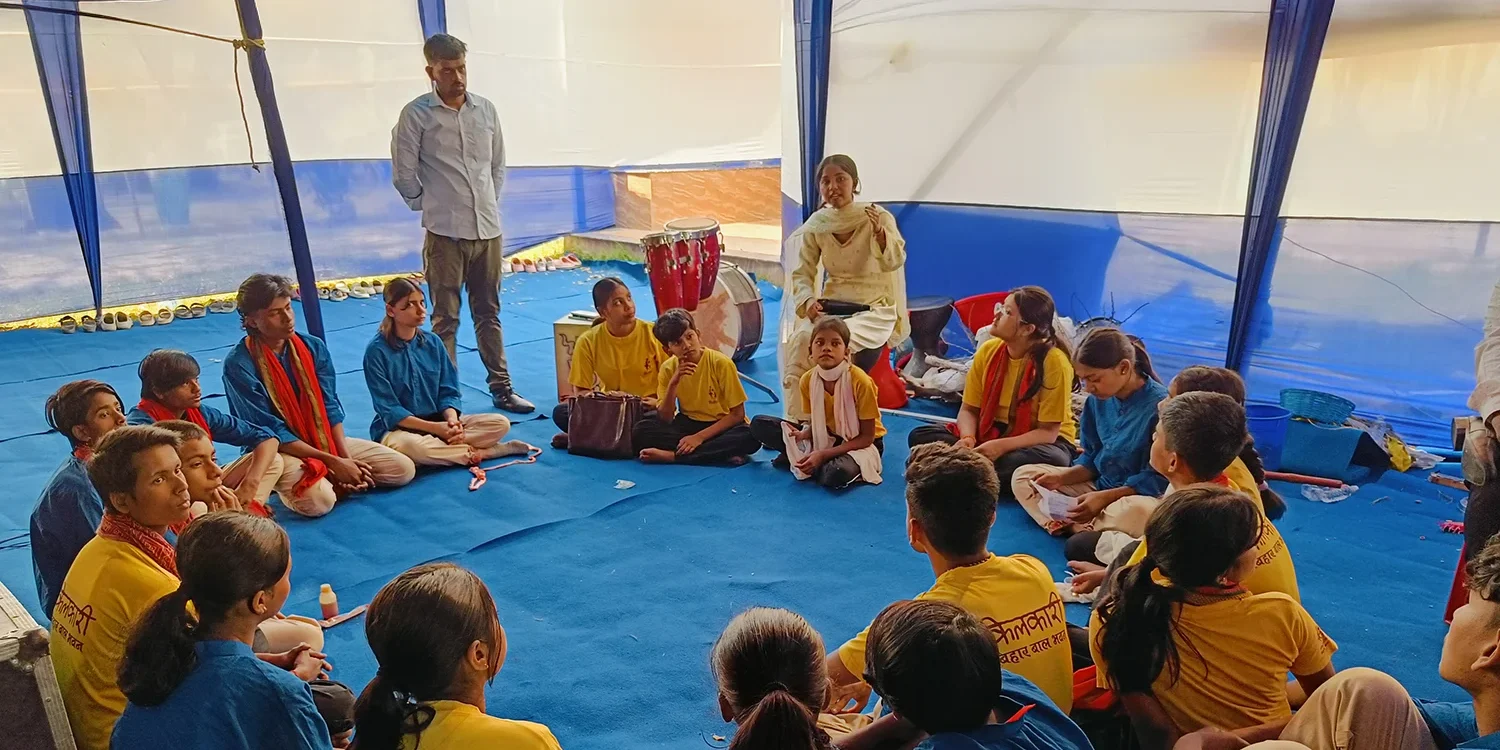
What is Reform?
In school, most students come across concepts that are difficult to understand the first time they are taught. A change in the teaching method can sometimes make the same concept much easier to learn.
In a physical education class, a teacher spent several sessions explaining tournament fixtures on the blackboard. How teams are paired, how brackets are drawn, how rounds are structured. Most students followed along but could not hold the concept clearly when it came to answering questions. One day, the teacher changed her approach. She took the class to the playground, divided everyone into groups, and asked the students to create the fixtures themselves. They had to decide who plays whom, draw the brackets, and run the first round. By the end of that session, almost every student understood what weeks of blackboard explanation had not achieved.
This is what reform looks like at the classroom level. Reform is a structured effort to identify gaps in an existing process and make changes to address them. It means finding what is not producing the right results, understanding why, and adjusting the approach. In education, reform happens across many levels including policy, curriculum, school management, and classroom practice.
Why Education Systems Need Reform
For many years, classrooms across India were largely built around a single measure of success: examination performance. Completing the syllabus, memorizing content, and reproducing it accurately on an answer sheet became the primary goals of schooling, but its limitations became increasingly difficult to ignore. A student could score well on an exam and still struggle to explain the concept behind the answer. According to ASER 2024, only 44.8% of Grade 5 students in government schools were able to read a Grade 2-level text, highlighting the gap that can persist between years spent in school and foundational learning outcomes.
Meaningful learning requires curiosity, questioning, discussion, experimentation, and opportunities for students to actively engage with what they learn beyond the examination hall. This recognition is directly reflected in India’s National Education Policy (NEP) 2020, which shifts focus toward experiential learning, critical thinking, and reducing dependence on rote memorization, prioritizing comprehension over mere curriculum completion.
What are Pedagogical Reforms?
The tournament fixture example points to something specific: the teacher did not change what she was teaching. The content was the same. What changed was how she taught it, and because of that, how students learned it. This is what pedagogical reform focuses on.
Pedagogy refers to how teaching and learning happen inside a classroom.
For a long time, the primary measure of effective teaching was whether the lesson was delivered and the syllabus was covered. Pedagogical reforms shift that focus toward outcomes. The question is no longer only whether a topic was taught, but whether students understood it, retained it, and can use it.
Why Better Teaching Methods Matter for Students
Pedagogical reforms shift students from passive receivers of information to active participants in their own learning. Students begin engaging with concepts, questioning them, testing them, and connecting them to situations beyond the classroom.
This shift has a direct impact on a range of student outcomes. When learning involves participation, discussion, and hands-on activity, students develop stronger communication skills & confidence as they express ideas clearly. They build problem-solving ability by working through real tasks rather than rehearsed answers. Over time, these experiences also support socio-emotional development. Students learn to collaborate, handle feedback, and engage with peers in a shared learning environment.
It’s visible in Project-Based Learning Melas conducted in schools. During these events, students present work they have built over time through research and investigation. In many such interactions, students are able to explain their thinking clearly, answer follow-up questions confidently, and connect their work to real-world situations. That level of engagement is difficult to achieve through memorization alone.

Project-Based Learning: How Mantra4Change is Bringing Pedagogical Reforms to Classrooms
Project-Based Learning (PBL) shows what pedagogical reform looks like in practice. Instead of focusing only on completing the syllabus, PBL gives students the opportunity to investigate concepts in depth and connect their learning to real situations.
Mantra4Change has been supporting the integration of PBL in government schools across Bihar, Odisha, Nagaland, and Andhra Pradesh through partnerships with state governments and education departments. The work focuses on building teacher capacity, supporting school leaders, and helping create classrooms where students learn through inquiry and problem-solving.
PBL changes the roles of both teachers and students in a classroom. Teachers move from being the primary source of information to facilitators who guide learning through questions, feedback, and reflection. Students take greater ownership of their learning by investigating problems, testing ideas, working with peers, and presenting their findings.
Since its launch in August 2023, Project-Based Learning in Bihar has reached over 47 lakh students in Grades 6 to 8 across nearly 29,000 government middle schools in all 38 districts of the state. At this scale, the program has led to measurable improvements in classroom practice and student learning, including stronger conceptual understanding, greater student ownership, and learning gains in Mathematics and Science. These findings are summarized below and discussed in detail in the Bihar Project-Based Learning Impact Report. (PBL Report Bihar)

Key Outcomes from Mantra4Change's PBL Work in Bihar
- Teachers in facilitator or mentor roles: 32% → 71%
- Teachers who had never implemented PBL: 32.3% → 4.3%
- Student self-initiative in sourcing project materials: 41.7% → 57.8%
- Average learning gain in Mathematics and Science: +8.84 percentage points
- Students who rated PBL as “Very Good”: 75.9%
This impact is also visible during Project-Based Learning Melas. The interactions during PBL Mela show that students understand what they have learned and can apply it meaningfully.
What This Means for the Future of Learning
India’s National Education Policy 2020 recognizes that examination scores alone do not reflect how well students are learning. The policy emphasizes competency-based learning, where students are assessed on their ability to understand concepts and apply them. It also highlights skills such as critical thinking, communication, collaboration, and problem-solving, which are increasingly important as technology, the economy, and society continue to change.
This shift is necessary because students will need to adapt to new tools, changing job roles, and complex real-world challenges. Classrooms that encourage students to question, investigate, and apply their learning are better suited to preparing them for these demands.
For this change to be sustained, classroom practices need support from the wider education system. Teachers require continuous professional development, and schools need academic support, mentoring, and leadership to reinforce new teaching approaches. Implementation also depends on adequate funding and institutional capacity.
Reform Is a Continuous Process
Education systems will continue to face new challenges as student needs, technology, and social realities evolve. For this reason, reform cannot be treated as a one-time initiative. It requires regular review of what is working, what is not, and what needs to change.
India’s National Education Policy 2020 reflects this approach by setting a long-term direction while allowing states, schools, and educators to adapt implementation to their own contexts.
The most meaningful reforms are often the simplest. A teacher changes the way a concept is taught after noticing that students are struggling. A school leader creates time for teachers to reflect on what is working. A district strengthens the support available to schools. Over time, these decisions improve how students learn.
Reform becomes sustainable when those closest to students are able to identify problems, test new approaches, and use evidence to assess whether learning outcomes are improving. When this becomes part of how schools and systems function, improvement is no longer dependent on a single program or policy. It becomes part of the culture of education itself.
A Question for Every Educator
What is one aspect of teaching and learning in your classroom, school, or system that could be improved so that students understand more and participate more actively?
Educational reform often begins with that question.