

Prime Minister Modi’s Viksit Bharat mission aims to make India a developed country by 2047. This goal is not just about economic growth. It means structural transformation across human capital, governance, and social institutions. Education is central to that transformation because it both transmits culture and prepares citizens for the demands of a changing global labour market.
So, how can education prepare India for its vision of becoming a developed nation by 2047? The answer lies in our classrooms, where India’s future is taking shape today.
India's Education Landscape: The Scale and the Challenge
India’s school education system serves 24.8 crore students across 14.72 lakh schools with 98 lakh teachers, as per the Economic Survey 2024-25. Government schools comprise 69 % of the total, enrolling 50 % of students and employing 51 % of teachers, while private schools account for 22.5 %, enrolling 32.6 % of students and employing 38 % of teachers.
India has made real progress in getting children into school. But the question is, what are they actually learning?
While enrollment has improved significantly, learning outcomes remain a major concern. According to the National Sample Survey Office’s 2023–24 report, India’s literacy rate for people aged seven and above stands at 80.9%.
The Learning Crisis
As the most populous country in the world, India has one of the largest shares of children with weak foundational skills globally. The ASER 2024 report, based on surveys across 618 rural districts, highlights this gap:
- Only 48.8% of Grade 5 children can read a Grade 2-level text—meaning more than half are still struggling with basic reading skills.
- The situation is even more concerning in Grade 3, where only 27.1% of children can read at that level.
- Arithmetic skills show a similar trend. Fewer than one in three Grade 5 students (just 30.7%) can solve a simple division problem.
Preparing Today’s Youth for Tomorrow’s World
However, beyond these immediate concerns lies an even more pressing question: are our schools equipped to nurture future-ready students with the skills and competencies needed to thrive in an increasingly dynamic world?
Think back 15 years. AI as we know it today didn’t exist. Now, technology is changing work faster than ever. The skills that matter are shifting. The jobs today’s students will do may not even exist yet. So fixing the learning crisis isn’t enough. We must think beyond that. In a world of rapid change, young people need the right mix of skills to thrive. Skills such as communication, teamwork, critical thinking, and flexibility have always been important in both work and life.
Ensuring our teachers are well-trained and our curriculum is future-ready will be the key to empowering the next generation.
Photo by Nicholas Latinovich (Intern, shikshalokam)
Beyond the Classroom: What Students Actually Need
What does a child have after completing 10 years of schooling? Whether or not they have passed the 10th board exam, children typically lack the knowledge, capacities, and dispositions to thrive professionally, financially, socially, physically, or mentally.
Organisations like DreamADream, a Bengaluru-based nonprofit working with underserved youth, have shown that teaching collaboration, self-management, and leadership through sport and the arts can begin to close that gap.
The National Education Policy (NEP) 2020 emphasises:
“The education system must prepare students for the jobs of the future, which will require a combination of technical skills, problem-solving abilities, and creativity.”
Unfortunately, experiences that build lifelong competencies are not happening in most schools.
Photo by Nicholas Latinovich (Intern, shikshalokam)
Future of Work and Integration of Skilling & Education
The jobs that will employ today’s schoolchildren will demand people who can learn continuously, collaborate across differences, and solve problems with no textbook answer.
Embedding these skills into how subjects are taught, not just what is taught, is the shift that matters. A student who learns history through debate, or mathematics through a real community project, is practising the exact capacities the future will require of them.
This transformation requires:
- Teacher training programmes that go beyond subject knowledge
- Curricula that treat life skills as core, not co-curricular
- State governments willing to measure more than exam scores
Why Focus on Life Skills?
Pinki is a 13-year-old girl from Bihar. She can solve math problems and complete her homework on time. But when her teacher asks the class to work together on a project, she does not know where to begin. She finds it hard to share her ideas and listen to others. When things get difficult at home, she has no way to manage her feelings.
Pinki is not alone. Across India, millions of children just like her are passing exams but are not ready for life beyond the classroom.
This is where Life Skills education steps in.
21st Century Skills refer to the skills required to enable an individual to face the challenges of the 21st-century world, which is globally active, digitally transforming, moving collaboratively forward, progressing creatively, seeking competent human resources, and quick to adopt change.
Recent Union policies, including NEP 2020, NIPUN Bharat Mission, and National Curriculum Frameworks, have emphasised the need to strengthen Life Skills across Indian education within a more holistic, competency-oriented framework.
What do these policies ultimately say? The purpose of education is to ensure well-being now, so that we can prepare children for their future as responsible, capable human beings.
Lower Life Skills levels among Indian children are likely a major factor preventing improvements in academic outcomes. High levels of Social and Emotional Early Learning (SEEL) and Life Skills have been linked to better mental health, higher employment, and stronger problem-solving skills. This highlights the need to strengthen Life Skills in education.
Pinki does not just need to pass her exams. She needs to be ready for life. And that is exactly why Life Skills must be at the centre of every child’s education.
Mantra’s Contribution to Future Readiness
Mantra has been working on Life Skills for many years, most notably through Project-Based Learning (PBL) School Improvements (SIs) in Andhra Pradesh, Bihar, and Odisha.
PBL works as a pedagogy because it gives students the chance to practice collaboration, communication, creativity, and critical thinking while learning their regular school subjects. Beyond PBL, Mantra has also run several other programs to build Life Skills in students, including Morning Assembly, Clubs and Cabinets, Aata-Arivu, and the Wellbeing Club.
Imagine a classroom where learning fractions means planning an actual school event and managing its budget. Or where studying ecosystems means designing a real plan to protect the neighbourhood park.
The takeaway is simple: when children are given the chance to practise life skills within their regular schooling, they rise to the challenge.
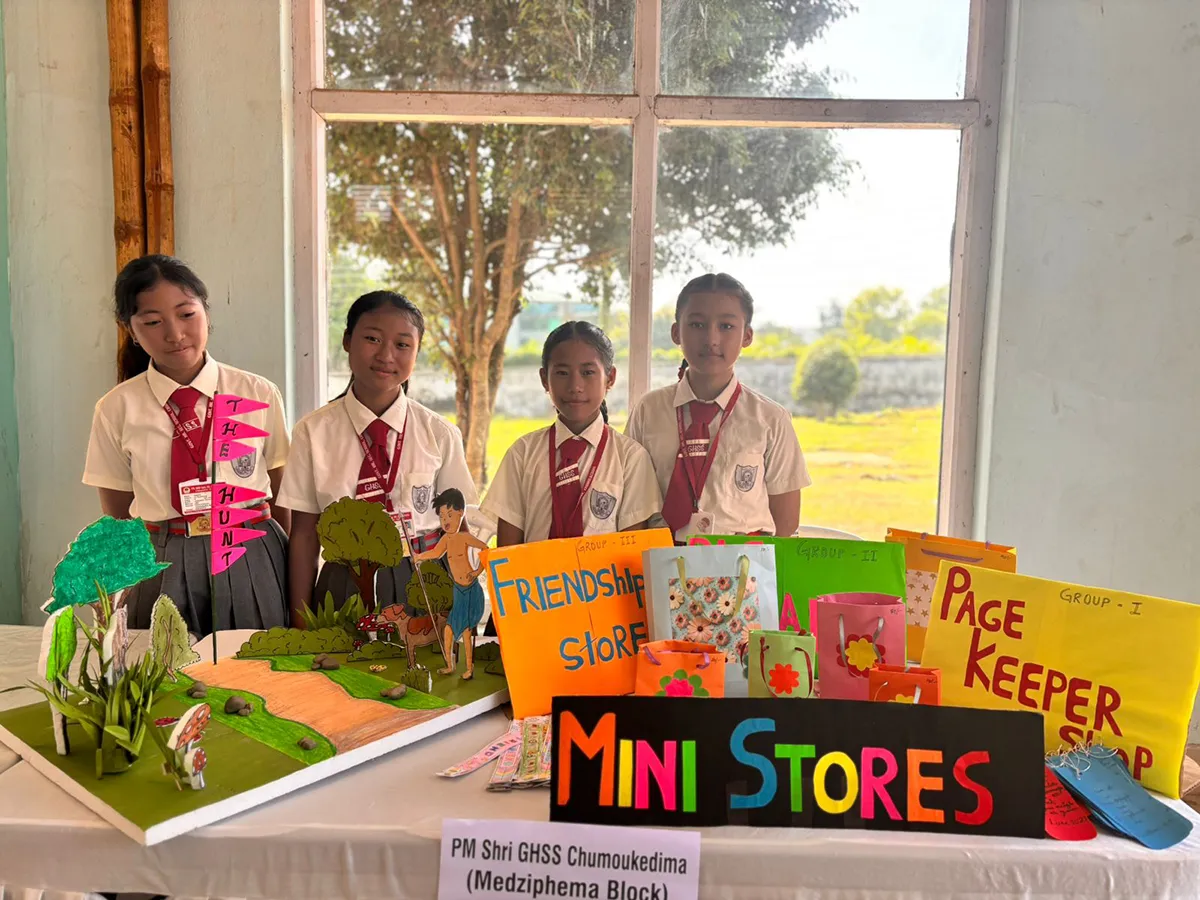
Photo by Ritika Behera (Lead, Mantra4change)
The Way Forward: A Collective Responsibility
The solution? Everyone must move together. Teachers, school leaders, parents, communities, NGOs, and the government all need to work toward the same goal.
Life skills must become part of the system itself, not just practised in a few classrooms, but embedded in how schools operate and how policies are made. Only then will we see change at the scale India needs.
India will not become a developed nation by 2047 by producing graduates who can pass tests. It will get there by producing people who can think, adapt, lead, and look out for one another.
That shift begins in the classroom. And it needs to begin now.