
I never expected to feel inspired by a dashboard packed with numbers, yet now I’m driven by data and its stories. Any data set is just a collection of numbers until it begins to make sense and pushes you to ask deeper questions. That’s where my journey began. As a mechanical engineer, I never imagined my path would turn out this way.
Here’s the thing about life: journeys can be surprising, filled with unexpected twists and turns. Even though I liked my engineering career, I had enough reasons to pursue a career in education.
During my studies, I never imagined I would build a career in education
After finishing my studies, I started teaching at a school. While I was working as a teacher, I often thought about how many students and schools I could reach, even while teaching one class. I wanted to do something bigger, to impact more students.This desire to make a bigger impact encouraged me to look beyond teaching and explore new paths. I wanted to educate and challenge myself to be the best. Today, I’m in a position to design learning experiences for schools and collaborate with education leaders to ensure every child has access to meaningful learning.
While working at the school, I noticed that teachers had more time with their students. That’s when I started thinking about how I could have a broader impact in the same field, and what other opportunities I could explore. How could my work in education impact more people?
This thought was also on my mind: if I work with one teacher, it’s like I’m reaching 30 students, and I can have that much impact on the ground. Then I started thinking about working with leaders in the education sector. That’s how I came to be a part of Mantra4Change.
Discovering my passion for research and design
I joined Mantra as a Program Lead, working closely with the Anekal cluster. Later, as I explored my interest in design, I moved into a Research & Design role. There were definitely challenges along the way, but they never intimidated me; I saw them as stepping stones on the path to expanding my skill set. Looking back, this journey feels like it helped me find what I truly enjoy doing. Today, I work as the Senior Lead, Monitoring and Evaluation, in Mantra’s Research and Design team. Interestingly, I used to struggle with numbers and formulas, but now I enjoy working with them every day through data dashboards.
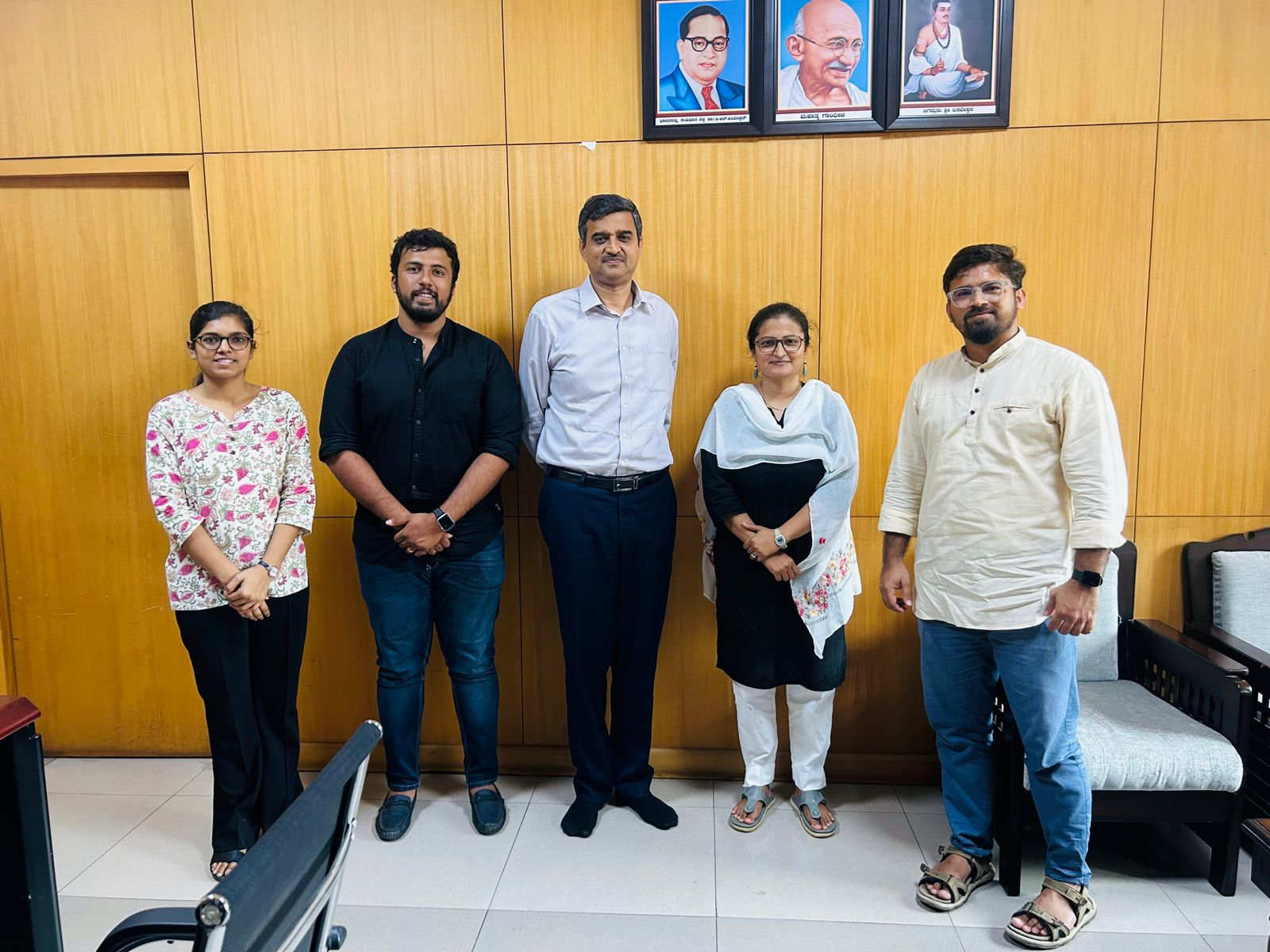
What really helped me through this phase was the constant support and guidance from colleagues and mentors within Mantra. Siram Chemuturi, as the Head of Research and Design, played a key role in shaping my design ideas. His guidance helped me think and develop practical solutions. Something he would often remind me of was to always look at things from the user’s point of view and keep things simple.
Sindhu Shree has also been my go-to person and a constant brainstorming partner. She is always open to discussion, and we often share challenges from our programs and think through how to solve them collectively at scale. Together, their support has made a real difference and has been a strong pillar in my journey.
Anekal: Where Everything Changed
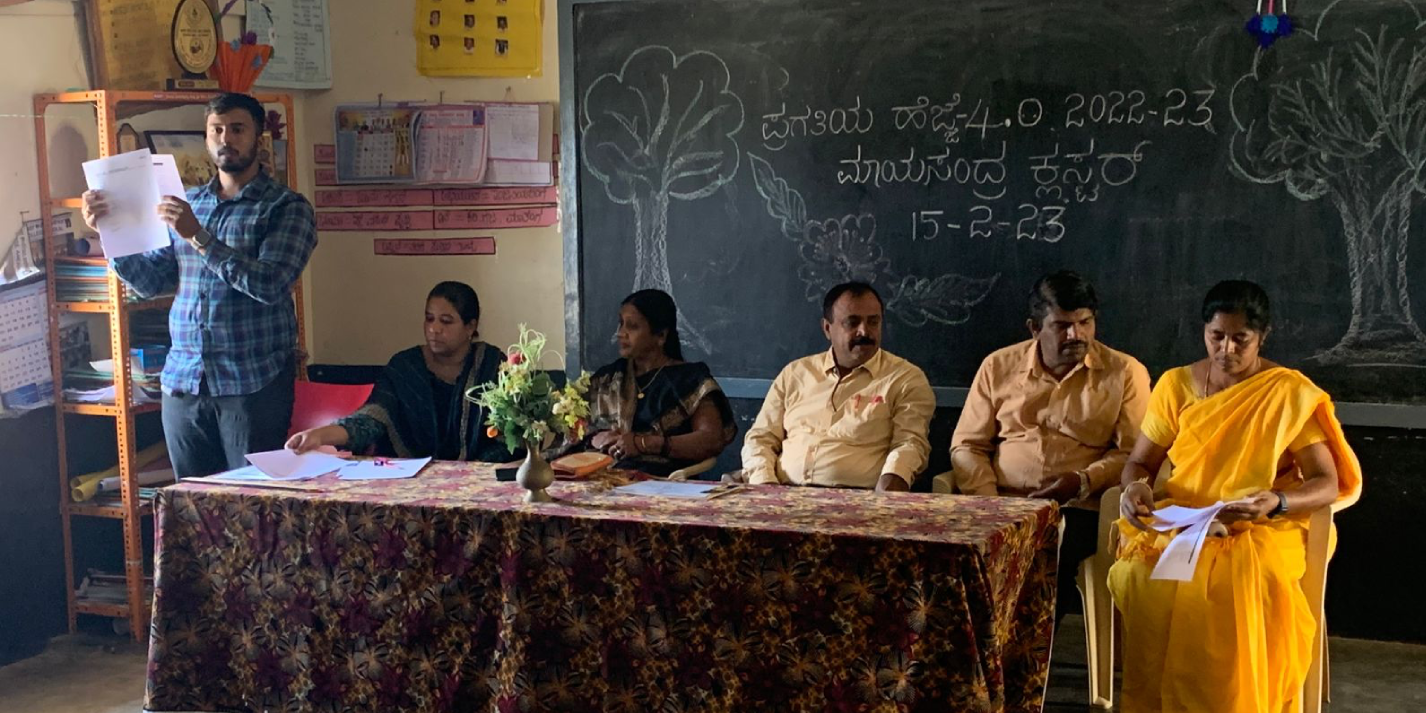
What stood out most for me was the opportunity to start working in the Anekal Cluster Transform program. It was a very rewarding phase at Mantra and taught me many valuable lessons. In the early days, even my first Logical Framework (LFA) document received extensive feedback, which helped me improve both my thinking and my approach.
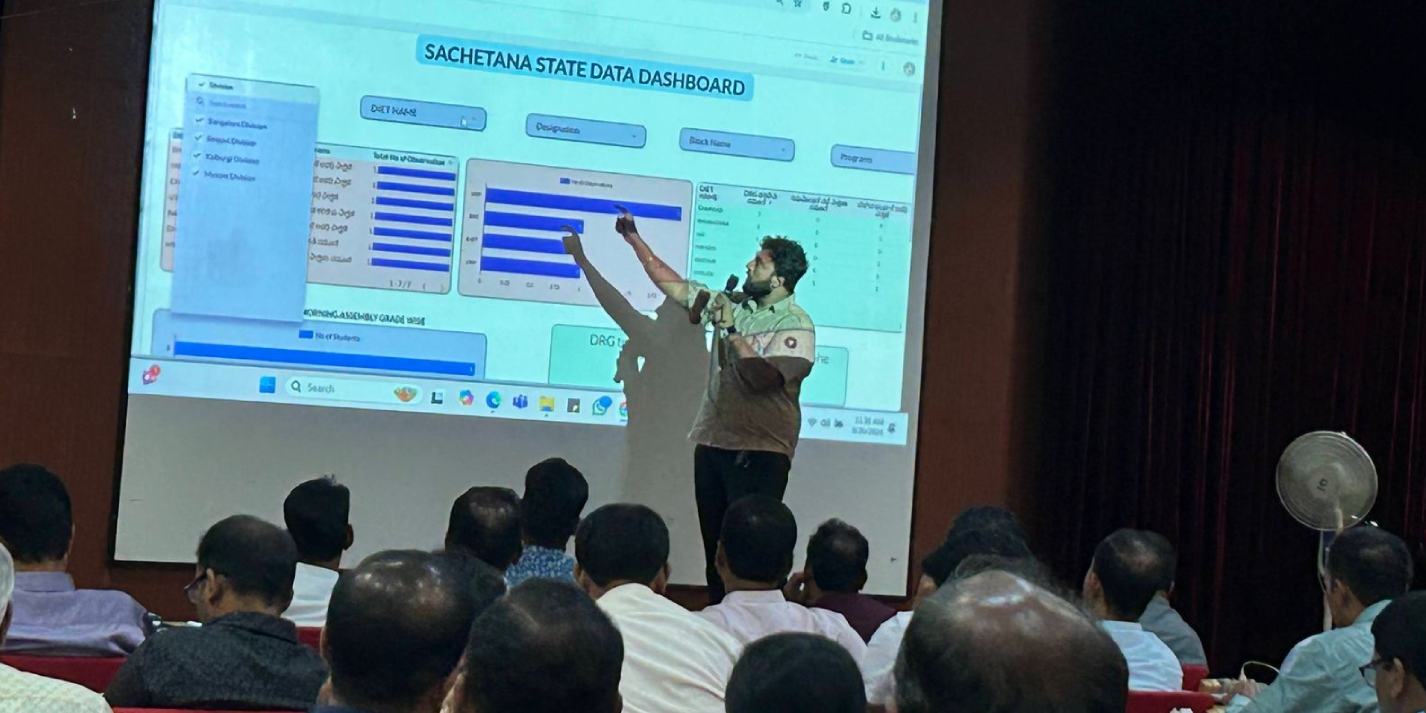
Over time, this learning gradually grew into a deeper engagement with data. I started building dashboards and analysing insights more closely, which helped me better understand the programs. These skills have continued to develop, and today I use them to support and guide programs across the state and the organisation.
Another important realisation from my time in Anekal was the importance of strong structures and processes. I learned that without them, even well-intentioned efforts can struggle to be implemented. This understanding, which began during my Anekal experience and has grown over time, now shapes how I design initiatives. I make sure they are supported by simple and clear systems so that everything can be implemented smoothly.
Learning, Unlearning, and the Reality of the Field
While I was working with the Karnataka Programs team, I assumed we were helping the teachers and the system, and that whatever solution we provided would work in the school. I expected they would use it. I also assumed that, since I started my work as a design lead, anything designed would be taken and implemented as is. What actually changed was when I hit the field; the kind of learning I got there really helped me learn, relearn, and unlearn. Introducing a well-designed school improvement solution will not work; it’s all about creating something that can adapt to the realities of a classroom.
While I began exploring the department at the cluster, block, and district levels, I understood the approach to working with the system and the support they need from us as an organisation. Working closely with the department has been essential in helping me understand the real challenges schools face. A lot of my understanding of stakeholder engagement comes from working with the team. Pradeep and Vijay Kumbhashi are key people who helped me understand how to engage with stakeholders. What I have learned from that is:
It’s important for a learning designer to know the pulse of all stakeholders to create the best possible designs for the community.
How a Dashboard Changed Conversations
Each program in Karnataka had its own observation tools, and over time, it became clear that this fragmentation limited visibility into what was actually happening on the ground. As I worked across different programs, this became even more evident, leading to a simple question: how could all this information be brought together?
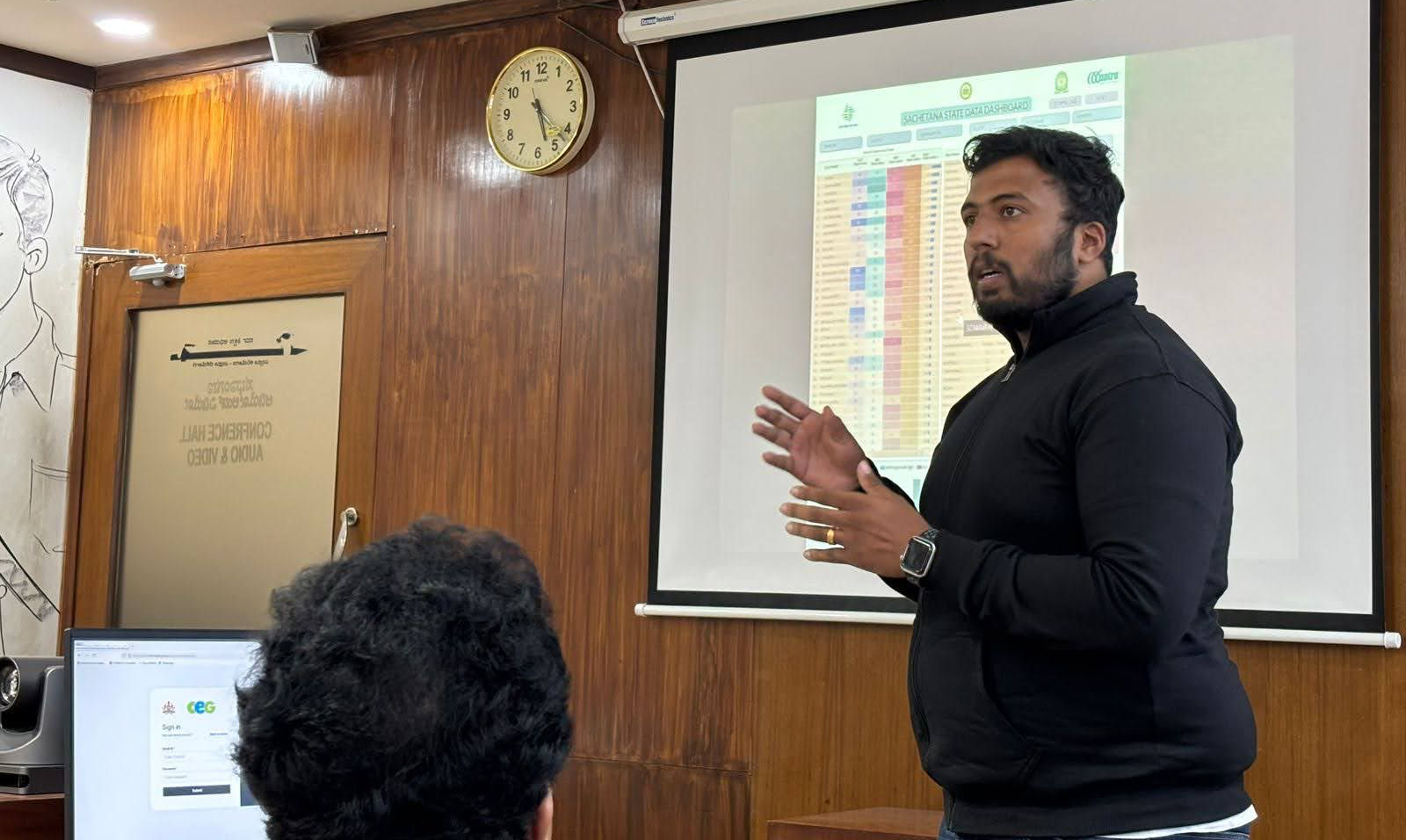
With the team’s support, I tried to create a single, unified dashboard that would let data from multiple programs be viewed in one place. This made it easier for all of us to see and compare data from a single place and take action on it, while also bringing more consistency in how data was captured and understood.
Over time, this shift began to influence the nature of conversations themselves. Meetings with departments were once mostly focused on sharing updates and going over processes. Over time, as data became more available and played a bigger role, these meetings gradually evolved into data-driven review discussions, where the focus shifted from what was done to what the data revealed about progress and outcomes.
We, as a team, started talking more about data. This was not just a change in tools, but a change in mindset. Data became a shared language within the team, helping improve alignment among program stakeholders.
Learning for the Future of Every Child
Mantra always reminded me to take one step at a time. It encouraged me to ask, “What else? What more?” It gave me ownership, created a sense of possibility, surrounded me with the right people, accepted my mistakes, and helped me learn to deal with them.
I’m grateful to the people who showed me how to work with teams, taught me how to keep things simple, and supported me through my design journey. But the learning doesn’t stop here;
The real question I carry forward is: how can I keep learning to serve children better and make education more meaningful for them?
Mantra, in many ways, has been a space for me to experiment, learn, fail, and learn again. As the organisation continues to grow, it also creates opportunities for people to grow along with it. What you take from it really depends on how you choose to engage with these opportunities. For anyone passionate about school improvement and transforming learning experiences for better student outcomes, Mantra is a place where you can explore, take ownership, and grow with the team’s support.