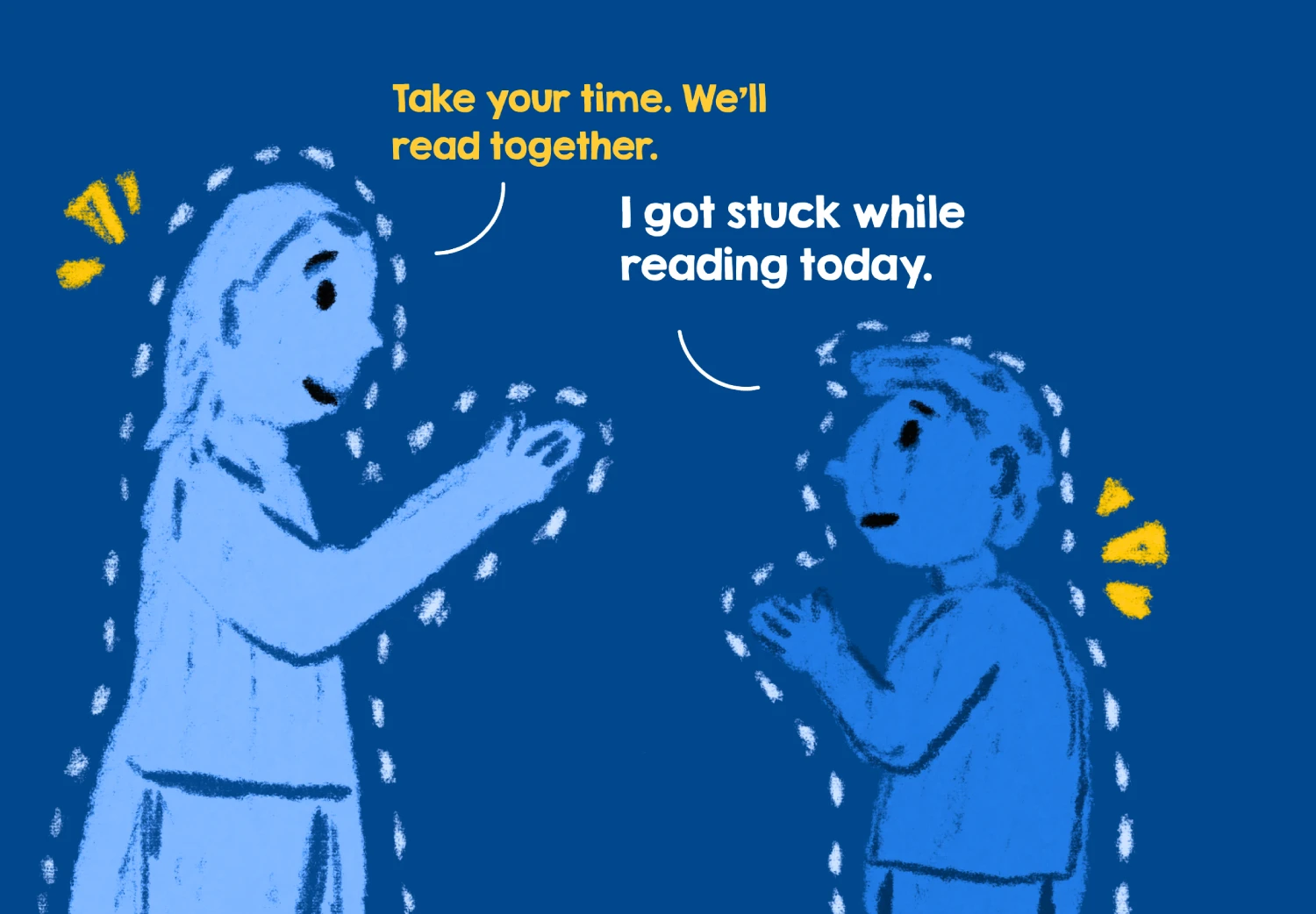


A look at how agency, awareness, and well-being shape our children’s future beyond the classroom.
The Reality Facing Modern Parents
We live in a time when many people think parenting should be easier than before. Today, answers are everywhere. A quick search on Google or a prompt into tools like ChatGPT and Gemini brings information in seconds. It looks like a world where everything is in sync and easy to find.
But as technology and the economy change rapidly, a parent’s role is actually becoming much more hands-on, emotional, and demanding. We often talk about schools, curricula, and teachers, but the home is where children first practice for their future.
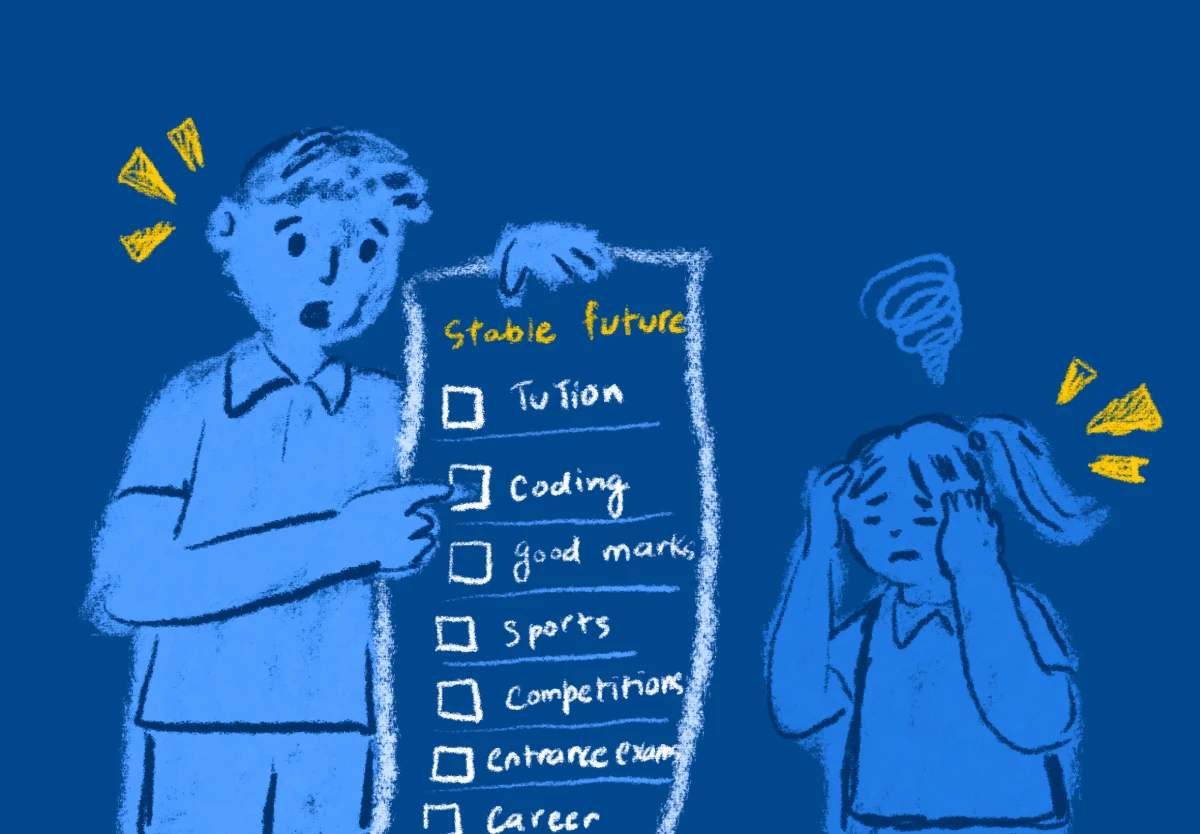
Yet, growing up today has turned into an exhausting race. The job market is chaotic, and old paths to a stable career do not work the way they used to. Parents naturally worry because they do not know what future careers will look like or how modern admissions work. Because they love their children and fear they will fall behind, parents often end up trying to manage every single exam, tuition class, and hobby. Childhood slowly stops being about free play, rest, or natural growth, and gets turned into a strict routine just to build a strong resume
The Cost of Academic Pressure
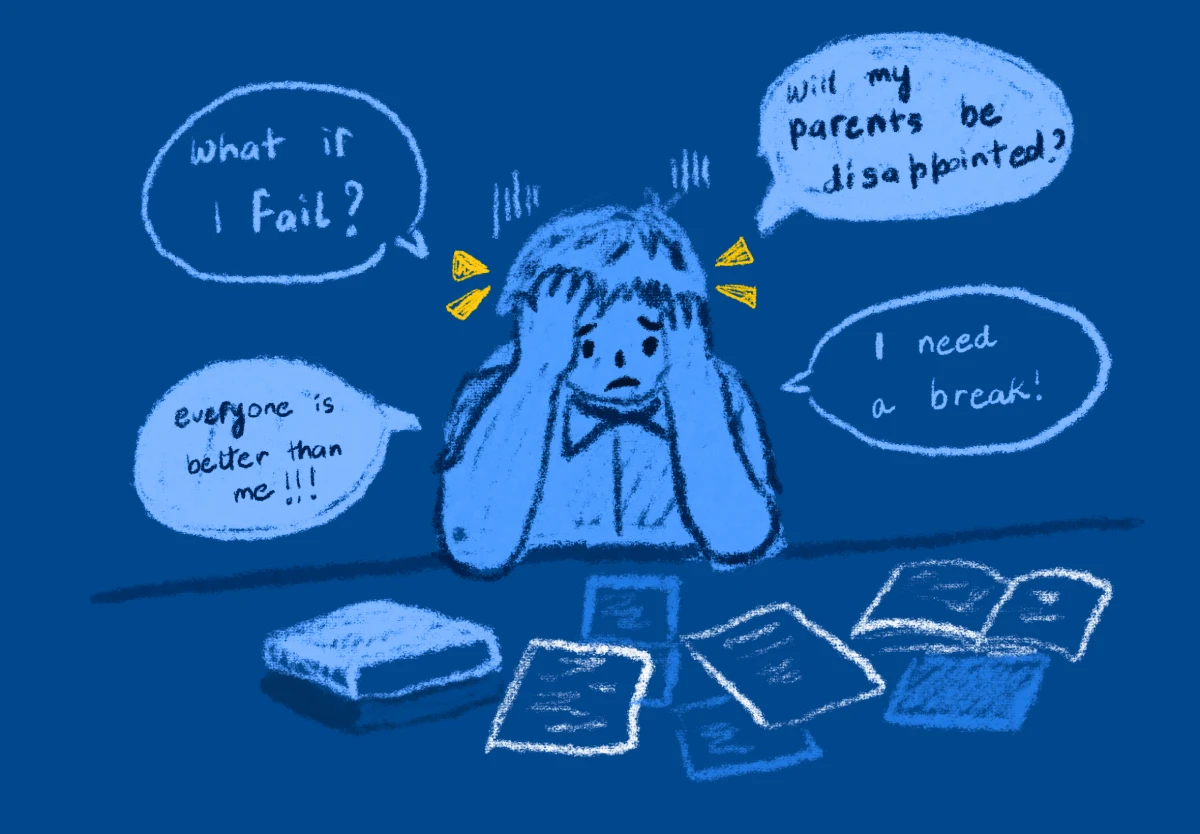
Children end up absorbing all this fear. Across India, the data shows how serious this crisis has become.
In a nationwide survey of over 3.79 lakh school students conducted by the National Council of Educational Research and Training (NCERT, 2022), nearly one in three students reported experiencing persistent anxiety and stress, with exam fear being the primary cause. In major coaching hubs across the country, student distress helplines (such as regional tele-counseling services) report that over 60% of calls come from teenagers battling panic, severe sleep loss, and the dread of failing family expectations. Public health findings highlighted by the World Health Organization and policy reviews analyzing national NCRB Suicide Data (CMHLP) show that youth distress remains at emergency levels, with thousands of young lives lost each year and exam failure consistently recorded as one of the leading drivers.
What makes this reality harder is that all this pressure does not even guarantee career stability. Research from Azim Premji University’s State of Working India (2026) report shows that the massive expansion in degrees has not been matched by a rise in secure graduate employment, leaving millions of educated youth stranded in the fragile transition between learning and earning. Families routinely stretch their monthly earnings to fund endless private coaching, yet sacrifices often leave young people stepping into adulthood carrying heavy emotional guilt, chronic exhaustion, and very few practical tools for real life.
When young professionals look back on their schooling, the long-term emotional toll becomes clear. In offices across the country, young adults often find themselves paralyzed by ordinary setbacks, terrified of making mistakes. Having had their streams, schedules, and daily choices micromanaged throughout childhood, they enter their twenties struggling with decision paralysis because they were never trusted to practice real agency. They step into adulthood with polished resumes, but carrying creative burnout, persistent self-doubt, and a quiet emotional distance from their families that takes years to heal.
Understanding the Five Core Domains
This is why the phrase “future readiness” needs a closer look. Today, it is often treated like a checklist of extra tuition classes, coding bootcamps, and certificates. But at Mantra4Change, our understanding of future readiness is about the whole child, not corporate goals. We ask a much simpler question: Can our children explore their real interests, and can they grow into adults who can balance their work with their health and happiness?
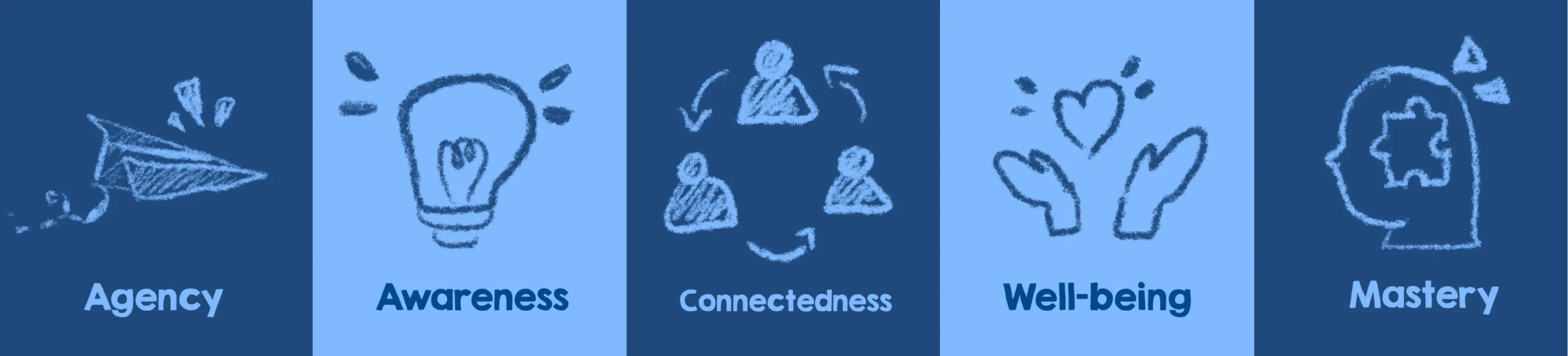
We understand future readiness through five basic parts of life. When everything becomes about marks, children slowly lose these parts of themselves, but simple changes at home can protect them:
- Agency: When parents decide every hour and every routine, children stop trusting their own minds. They grow into adults who freeze when making basic choices. Parents can step back a little to let children manage small daily tasks, make simple decisions, and learn from mistakes without fear of being scolded.
- Awareness: When a child only sees exam books, they miss out on how life works. We can help them look up by talking about daily news, taking walks around the neighborhood, and answering questions that never come in an exam paper.
- Mastery: Memorizing answers can get passing marks, but it does not teach real understanding. Real learning happens when young people have the time to build things with their hands, try ideas, and sit with a problem until they solve it on their own.
- Connectedness: When every conversation at home turns into questions about marks and ranks, children feel like they are only loved for their report cards, and friends start looking like rivals. Keeping everyday family time free from talk of exams helps children feel safe and supported no matter how they perform.
- Well-Being: High exam pressure steals the basic things a body needs. Children end up dealing with poor sleep, constant headaches, and exhaustion. Good food, eight hours of sleep, and time to play outside are basic needs for every child, not prizes they have to earn after studying.
Experiences from the Ground
We see the power of these basic shifts every day in our work with communities and government schools.
In Bangalore, Chaitra, a mother whose children study at GMPS Kamala Nagara, attended a school meeting that completely changed how she viewed her role at home. Instead of piling more pressure onto her daughters—Sumitra, Suchitra, and Anupama—she focused on making learning welcoming. She set up a small, colorful reading corner at home, prepared simple learning materials with support from teachers, and made time to sit beside them with patience. Without expensive coaching or rigid discipline, her children began to enjoy reading, writing, and understanding concepts naturally because home had become a safe space to learn.
In Bihar, a Class 8 student named Poonam Kumari from Middle School Bikopur in Gaya showed what genuine agency looks like. Coming from a family facing deep financial hardship, she faced heavy social pressure to stop studying and get married early. But through project-based learning at school, where she worked on real-life tasks and solved problems with her peers, Poonam found her voice. She gained the self-belief to speak to her mother, explain her dream of becoming a teacher, and stand up for her own education. Poonam’s courage did not come from memorizing a textbook. It came from learning that her thoughts mattered and that she had the inner strength to shape her own life.
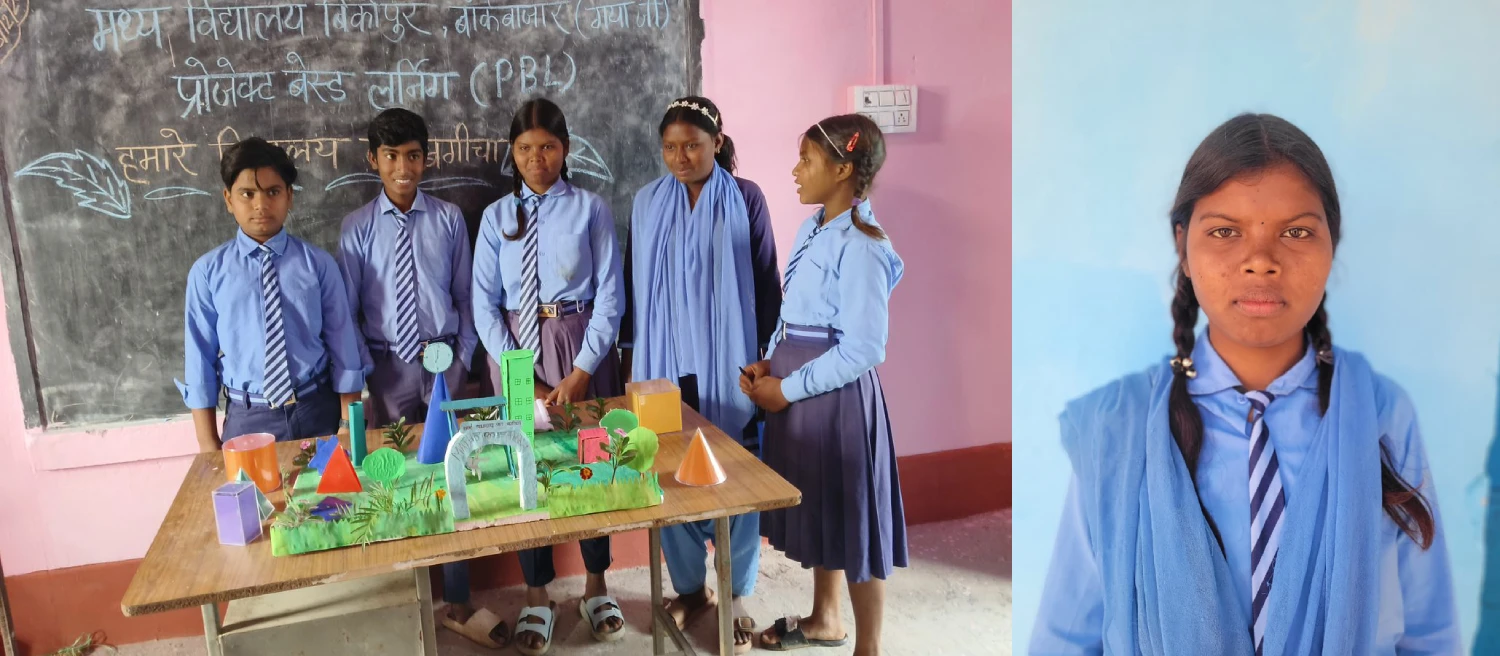
Poonam Kumari in a portrait photograph and during a classroom activity at Middle School Bikopur, Gaya.
Supporting Children at Home
At its heart, future readiness is simply about helping a child grow into a steady adult. When care turns into constant pressure, children stop seeing the world as an interesting place and start treating life like an obstacle course where a single academic setback feels like it will derail their entire future.
Parents do not need complicated theories or expert advice to change this. A person can grow up to earn a steady salary, yet still struggle to make everyday decisions, keep friendships, or handle routine pressure at work. Real adult life is not about having a flawless academic record. It is about knowing how to get back up after making a mistake, and knowing you have people to lean on when things go wrong. Simply being there with patience, listening without immediately judging, and reminding children that their worth is not tied to an exam result gives them the genuine confidence to face whatever comes next.