

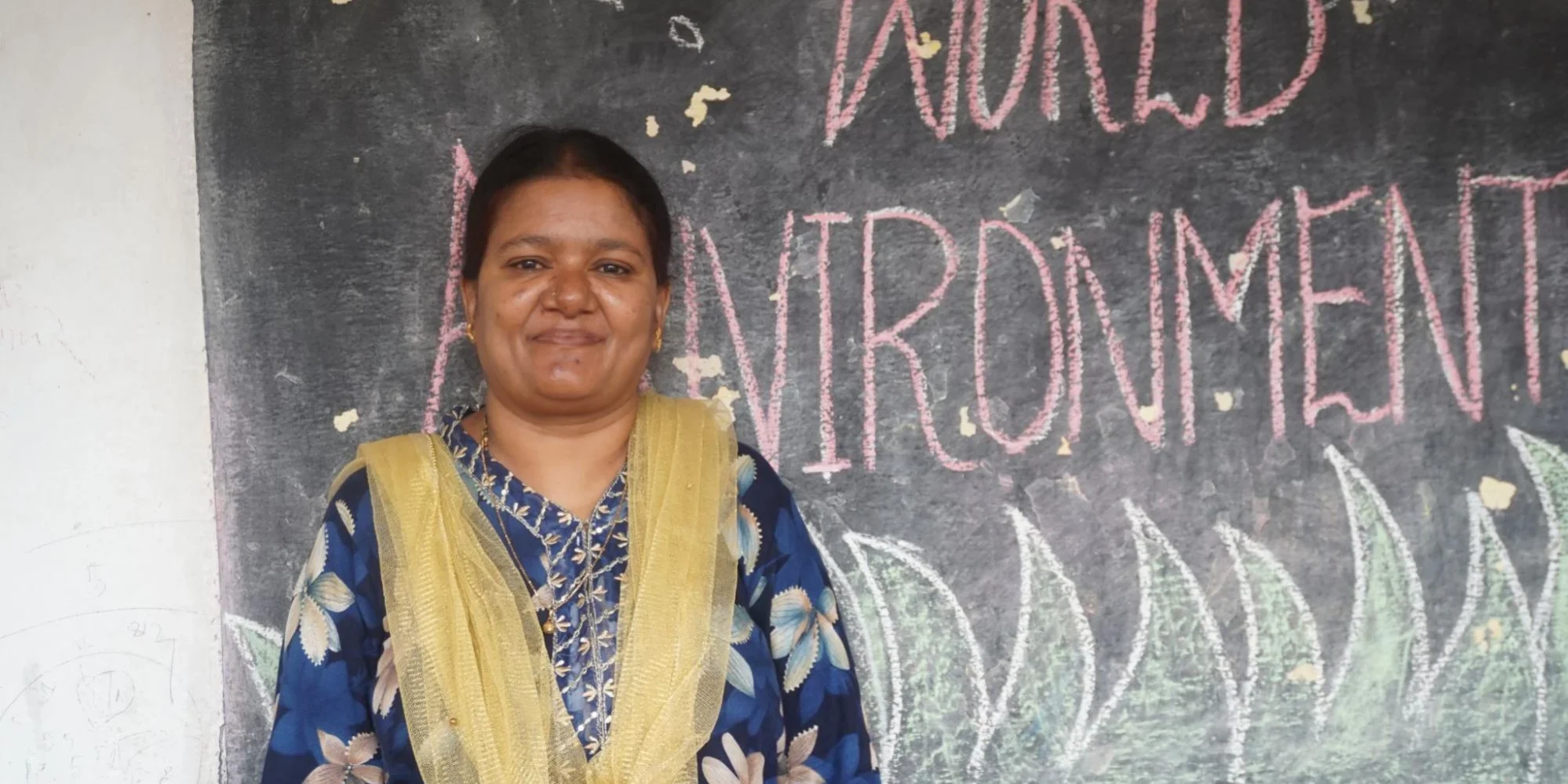
Shabana Khanum, School Leader, Government Urdu Lower Primary School (GULPS) , AJ Block, NR Mohalla, Mysuru.
I walked through the narrow lanes of the big colony in NR Mohalla, Mysuru district, past house after house, until I found it, a two-storey building tucked quietly between them.
This was the school Madhu had told me about.
Just 71 children and four teachers, making it their own. No grand entrance, no sprawling playground. The kind of place most people would pass without a second glance.
Madhu R, part of Mantra’s Mysuru team, had told me about this school more than once, about how it started its morning assembly activities under Sachethana, our programme supporting schools to strengthen morning assemblies, parent engagement, and other everyday structures within schools. I’d already pictured the place in my head before I got here. But standing in front of it now, I realised I’d imagined something entirely different.
After a day spent talking with the teachers and students there, I understood why they say a seed doesn’t care what language the soil speaks. It just grows.
For years, Mantra’s morning assembly calendars have been in Kannada, and we’ve worked primarily with Kannada-medium schools. But somewhere along the way, it reached Government Urdu Medium School, NR Mohalla, too, and I got to see how it found new roots there.
The mother tongue of 10.83% of the total population in Karnataka, numbering 66.18 lakh persons, is Urdu, as per the 2011 Census. In Karnataka, there are 4,051 primary schools, 470 secondary schools, and 5 higher secondary schools with Urdu as the medium of instruction.
The shift began with one leader willing to try. When Shabana Khanum, Headmistress of Government Urdu Lower Primary School, NR Mohalla, AJ Block, Mysuru North Block , came across the Sachethana calendar shared by DIET Mysuru, she saw more than a calendar. She saw possibilities.
Instead of asking, ‘How do I implement this?’ she asked a different question: ‘What could this become for my school?’ And so she decided her students would take part in the morning assembly activities too.
The families who live around the school are also the families who fill its classrooms, I learned as I walked in. Most earn their living as daily wage labourers, vegetable vendors, chicken shop workers, or by collecting and selling scrap. Some work at the scrap shop directly opposite the school.
Shabana Khanum explains:
“For many parents, it’s a sense of security. They know their children are inside the school—safe, learning and good meals. That gives them the peace of mind to focus on their work until it’s time to walk home together.”
Having spent nearly a decade at the school and having grown up in Mysuru herself, Shabana Khanum knows this community and its children.
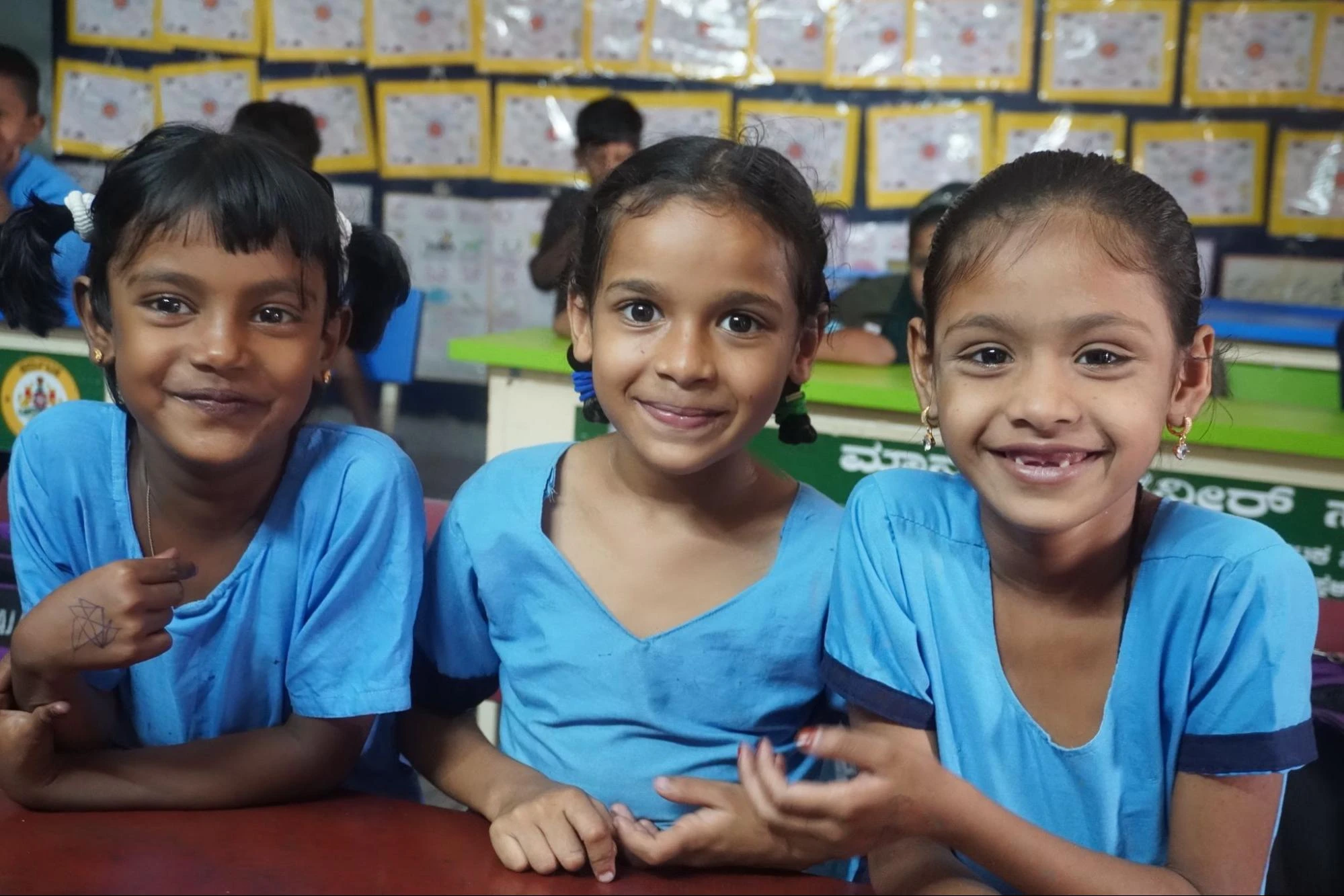
Students at GULPS, AJ Block, NR Mohalla, Mysuru.
What Stood in the Way
She told me how, for years, the challenges around this school remained the same. Many women in the community worked long hours, and once school ended, children were often left on their own. Stories of someone from the neighbourhood going on to college or building a stable career were rare, she said.
Later, when I spoke with Senior Lecturer at the District Institute of Education and Training (DIET), Mysuru, she put it simply:
“Creating awareness in the community should be our first priority.”
For many parents, it has become common for children to leave school after Class 7. It was something they had seen happen again and again. Parents who could afford it often moved their children to private schools, not always because the education was better, but because many believed government Urdu-medium schools could not offer the same opportunities.
Shabana Khanum believed things could be different. For her, it came down to trust. Parents weren’t rejecting the school itself; they were reacting to what they saw. If children became more engaged, and parents could see that happening right in front of them every morning, that trust would slowly come back. A student-led morning assembly could do just that: give children a stage to find their voice, and give parents a daily reason to believe in their school again.
How the School Found Its Own Way
We have all heard the old proverb, “Where there is a will, there is a way.” Shabana Khanum found her own way to create that change.
When Mantra4Change distributed the Sachethana Morning Assembly Calendar through the Block Resource Centres (BRCs) in Mysuru, one copy accidentally reached Shabana teacher’s school. Many would have simply set it aside. She saw it instead as a chance to bring change to her school.
The first few days were not easy, she recalled. Some children stood silently, too nervous to speak in front of their classmates. Others hesitated to sing. But every morning gave them another chance. Slowly, children started practising their speeches, songs, and skits.
Every teacher in the school stepped up and took equal ownership of the process. Whenever a class was scheduled to lead the assembly, its teacher became the coordinator, helping students prepare and making sure every child got a chance to participate. It became a shared responsibility, with each teacher contributing just as much as the next.
Let me tell you, great things can also be born in the smallest of spaces. Their morning assemblies happen right in the small corridor on the ground floor of the school, nothing more than that. But if you’d seen what I saw, you’d understand why it doesn’t need to be more.
Shabana teacher was sharing all this while showing me a diary, the one where they had documented everything, every assembly, every activity, carefully written down. The same children who once stood silent, too nervous to speak, now walk up to the front without being asked twice. Speeches that used to be read off crumpled paper are now spoken from memory. Even attendance on assembly mornings has grown.
And it’s not just the children. Parents have started coming to watch these activities too. I learned the school has a strong, 18-woman-led School Development and Management Committee (SDMC), and it clearly shows, you can feel a close school-community relationship here, with parents genuinely showing up for their children’s mornings.
Senior Lecturer at DIET Mysuru,shared:
“The planning and calendar of Sachethana is really good. Schools like AJ Mohalla are correctly following and documenting it. We should always monitor and track how many children are participating in these activities.”
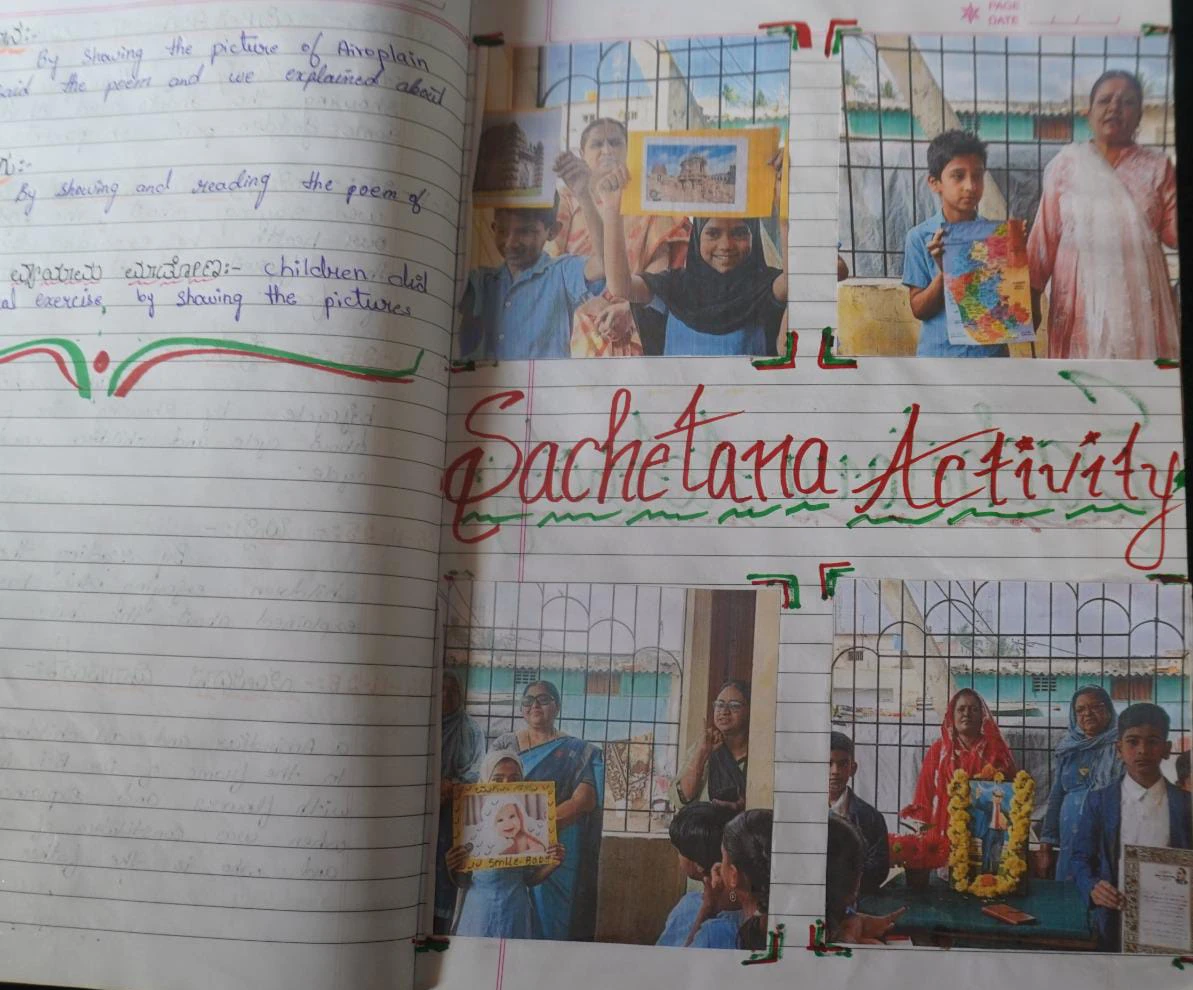
The diary documenting Sachethana morning assembly activities at the school.
The Seed Finally Bloomed
The work didn’t go unnoticed. At Pragathi Hejje 2025, the day Mantra4Change brings school leaders together from across the region to swap stories, learn from each other, and cheer on the changemakers among them, Shabana teacher’s school was called out for the Best Sachethana Implementation Award. That same year, DIET Mysuru had its own moment of recognition to offer, honouring the school with the District Level Best SDMC Award.
Sitting with Shabana teacher, I watched her look back at how it all came together.
“One thing we always did was document everything,” she told me. “When we heard about Pragathi Hejje and the awards, it pushed us to take things more seriously. We already had morning assembly before, and we had tried a few activities, but now we had a proper schedule, and we just had to follow it. I think it was the support of my students and teachers that got us here. I hope parents also feel their children are doing so much more than before.”
Before I left, she added,
“We are still just starting; there is a long way to go. But this year’s awards have been a big encouragement for us. We can do more, and this can open more doors for our children.”
I remember walking out of that corridor thinking,
” This school was never on anyone’s list. And yet, here it was, leading the way.