

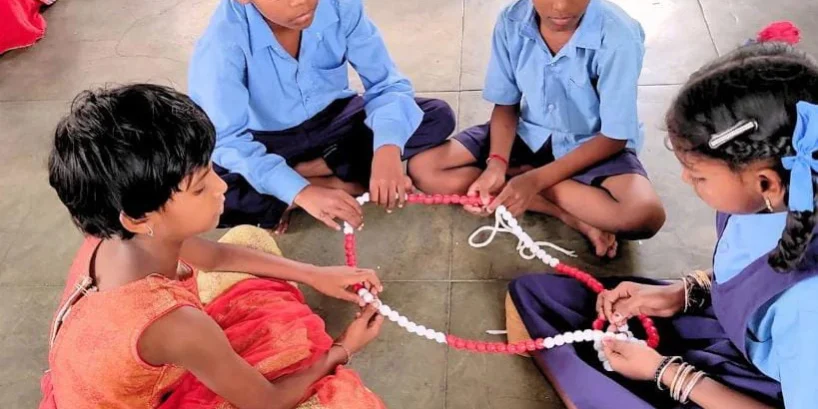
Walk past a Class 3 classroom where children are sitting in a circle, sorting cards and helping each other as they work. It looks like fun. But is it learning?
The answer depends on how the activity is planned and guided. Activity-based learning (ABL) is a teaching method where children learn concepts by doing tasks planned by the teacher. The task might be building a model of a volcano, a circuit, or the solar system, or reenacting history through a mock Parliament.
The Right to Education Act, 2009 says elementary education should involve child-friendly and activity-based learning. Shaped by state governments, teachers and education leaders, versions of ABL have reached over 250,000 primary schools and more than 10 million children across India. Andhra Pradesh, Karnataka and Tamil Nadu have taken it to all government primary schools in their states. Both NEP 2020 and NCF 2023 also encourage learning by doing.
Textbooks give structure. Activities help children put what they learn into practice. Here are six ways to make that practice count.
1. Start with a clear learning goal
Every activity needs a purpose. If you cannot say what students will understand by the end of it, the activity may not be worth doing.
Chart-making is a good example. It can be attractive and interesting, but if children are only copying information from a textbook and pasting it onto a chart, they may not learn much from the process.
Imagine a Class 5 teacher asking students to make paper boats. The children fold, colour, and decorate their boats, and the classroom buzzes with energy. But if the task is never connected to a learning goal, the students may have only practised a craft.
Now, imagine the teacher asks them to test how many coins each boat can hold before sinking. Students can compare their results, discuss why some boats hold more coins than others, and explore how shape and weight affect floating. The same activity becomes an opportunity to observe, question, and learn.
When the learning goal is clear, the teacher knows which materials to use, which questions to ask, and what to observe as students work. Without one, an activity can lose direction, and students may finish without understanding what they were meant to learn.
Classroom observations across states point the same way. The classrooms that stood out as child-friendly were those where activities were meaningful and tied to learning. In other classrooms, reading and writing tasks left less room for interaction and curiosity, which shows how much a clear goal can open up.
2. Guide, don’t take over
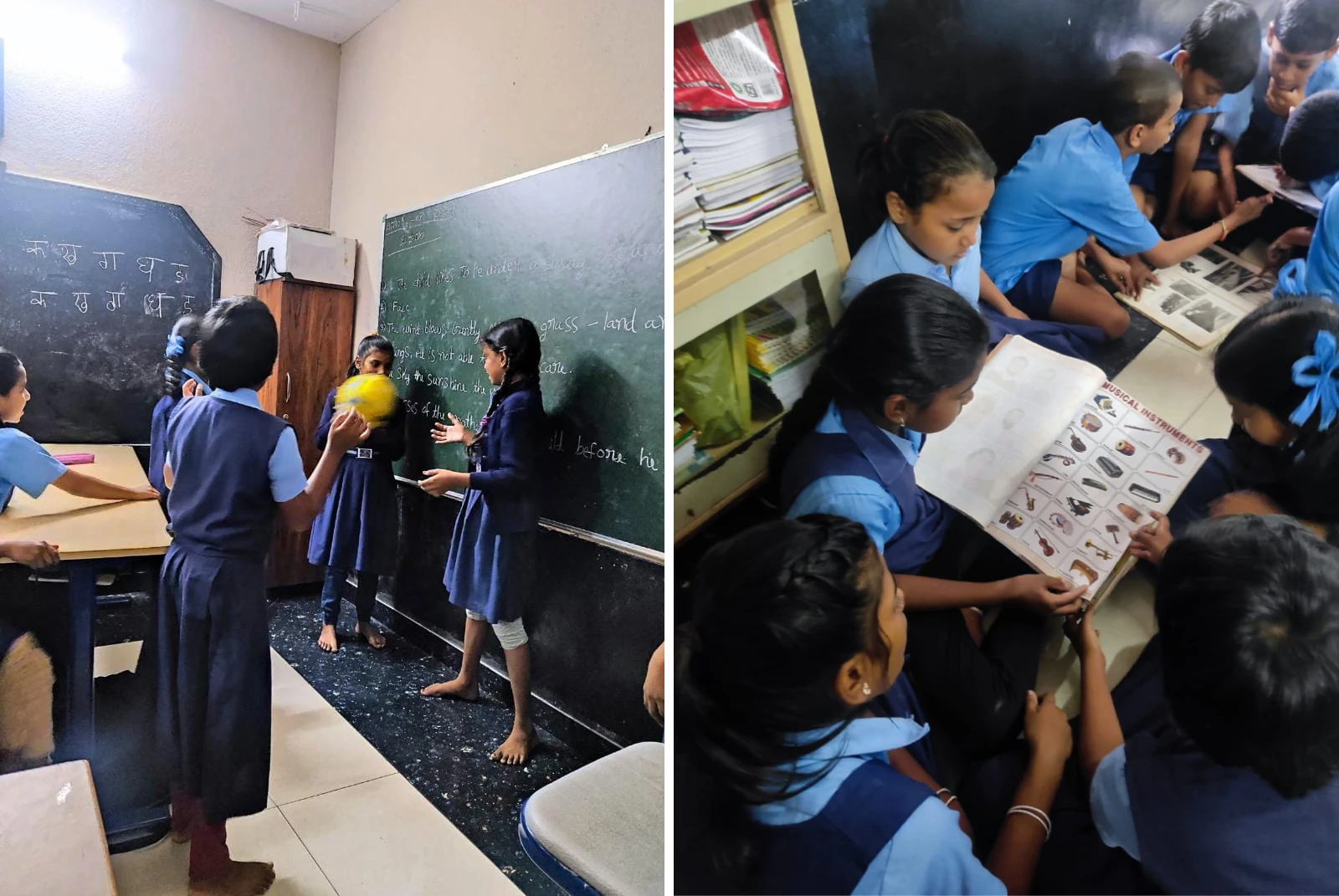
A teacher’s role is to guide the learning process, focusing on the journey rather than just the final product. Children need freedom to explore, with support when they need it.
Preparing the right materials and knowing what children need to learn are part of this. As groups work, teachers can move around and ask, “What problem are you trying to solve?” or “What challenges have you faced?” These questions push children to think rather than wait for answers. When children get stuck, a demonstration or small hint helps them move forward without the teacher taking over.
Picture a Class 6 science activity on electric circuits. One group’s bulb does not glow. Instead of explaining the fault, the teacher asks, “Can you show me the path the current takes?” Still stuck? She offers a hint: “Check each connection. Are the wires touching properly?” If needed, she demonstrates one correct connection and lets the students fix the rest. When the bulb finally lights, she asks, “Why do you think it did not light up earlier?”
Through this step-by-step support, students learn to spot problems and understand how a closed circuit works, and they discover the answer themselves.
Strong classrooms show this in practice. Teachers move around the room, notice errors in written work, give feedback, and make their own learning material from local resources. Where children wait a long time for help, it is a reminder that activity-based learning works best when teachers have the time, support, and materials to be present with every group.
3. Build in time for reflection
Reflection is what turns an activity into learning. Kolb’s learning cycle (1984) is a well-known idea that people learn best through experience, when they act and then think about what they did. Reflective observation is the stage in this cycle where learners look back, think about what happened, and consider whether the results matched their expectations and what they can learn from the experience.
After an activity, children need space to share what they noticed. Even when they have enjoyed it, they may need a little help seeing what they can take away. This is where a debrief, a short discussion led by the teacher, becomes valuable. It helps children connect what they did with the concept they are learning.
Teachers can begin with simple, open questions such as, “What did you notice during the activity?” or “Was there anything that surprised you?” These questions invite children to think about their own experience, not only about finishing the task.
A comfortable classroom environment matters just as much. Children open up when they feel safe, and that includes feeling safe to say, “I’m not sure.” Speaking in front of the whole class can feel daunting for some children, so reflecting first in smaller groups gives them the time and confidence to share their ideas.
Many states have already built reflection into the school day. Karnataka’s Nali Kali programme gives whole-group time at the beginning and end of each period, and Madhya Pradesh adopted the same structure when it revised its model after a review.
4. Make participation inclusive
Every child should have a chance to take part. That depends not only on how the teacher facilitates but on how the activity is planned. When an activity lets children contribute in different ways, fewer students feel left out.
In a group task, one child can present findings, another can take notes, and another can organise materials. Rotating these roles means every child gets a turn to shine, and participation is not limited to a few confident students.
Children also learn differently. Some understand an idea through pictures, others by doing, discussing or observing. Offering several ways to engage with the same idea makes learning more inclusive. Group work also builds communication and social skills, such as listening, sharing responsibility, and respecting other views.
Some children need extra time or practice, and that is perfectly natural. A child with special needs, for instance, may find it hard to join in without a role of their own. Flexibility makes room for this, whether through extra time, peer support, a defined role, or different ways of showing learning. Meeting every child’s needs in a large classroom is not easy, but planning roles and tasks in advance helps every child find a way in.
5. Design for the child’s age
Activities should match children’s age, learning level and everyday experiences. What works for a young child may not suit an older one.
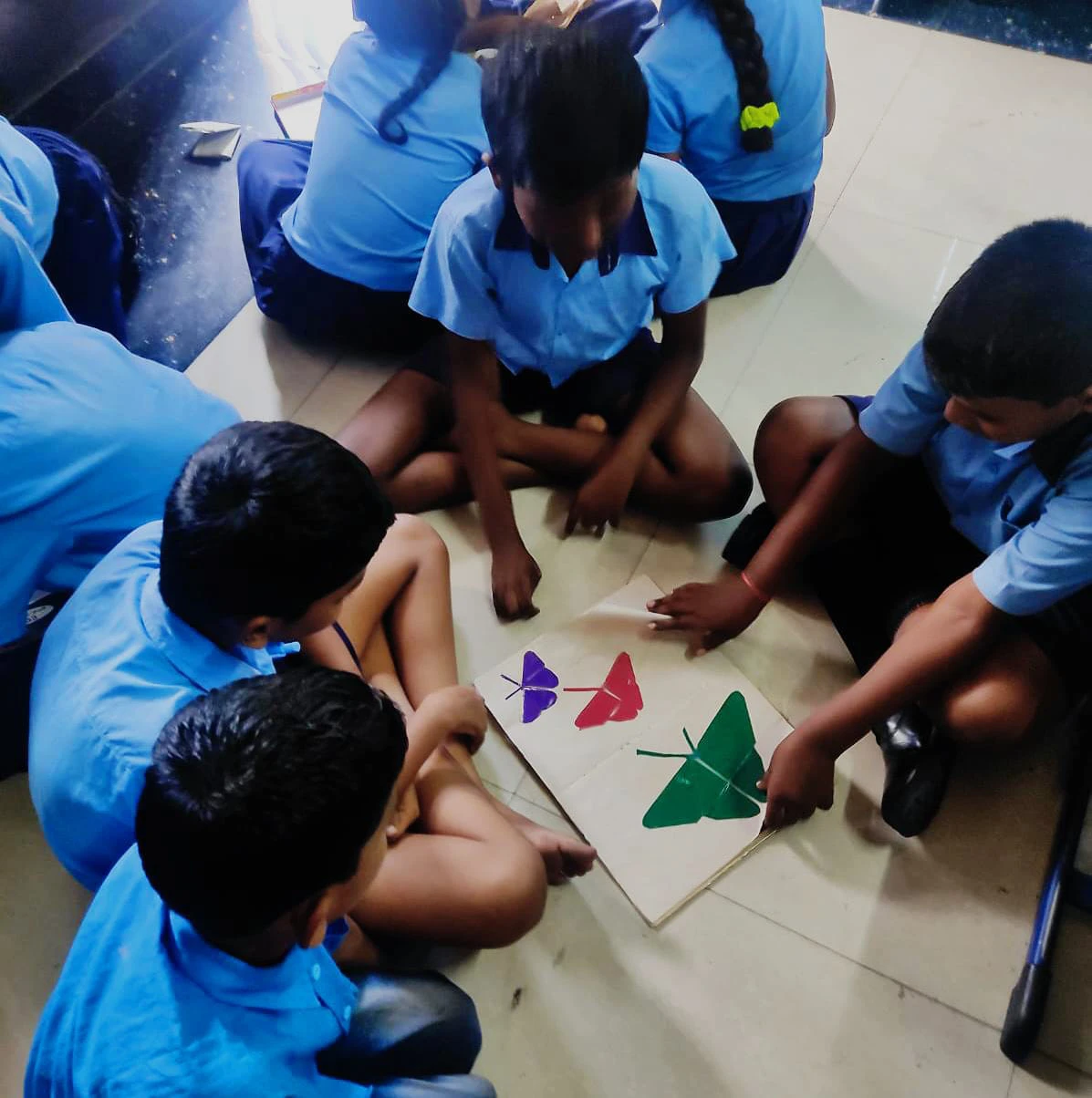
For primary children, storytelling, picture cards, puzzles, rhymes, clay work and number games make learning engaging. Children can use objects from a local vegetable market to practise counting and addition, or use learning cards to practise letters and words, count objects to learn numbers, and group objects to recognise patterns.
In upper primary, activities can grow into experiments, group projects, map-based learning, role play and model-making. Older students can run surveys, collect data, debate and present findings. They might compare prices, calculate discounts or prepare a household budget. In Andhra Pradesh’s Atal Tinkering Labs, students have built a password-based door lock and a model to help prevent train accidents.
ABL is useful at every age. Only the activities change as children grow.
States have shaped ABL around their own children. Karnataka’s Nali Kali began in 1995 as a small project in 270 schools in H.D. Kote taluk, Mysore district, after a group of Karnataka teachers and administrators visited Rishi Valley in Andhra Pradesh and chose to adapt what they saw. It uses songs, games, stories, picture cards and hands-on activities in Classes 1 to 3, and today it is a statewide programme.
Other states made it their own too. Gujarat’s Pragna includes “Rainbow activities” in seven categories, with a dedicated slot every alternate day to develop multiple intelligences and motor skills. Jharkhand’s programme opens Class 1 with a school-readiness package of mud play, local games and rangoli, so children feel at home. For Classes 3 and 4, it uses a five-stage learning cycle that moves from checking prior knowledge to teacher-guided learning, self and peer learning, a real-life project, and finally a demonstration of that project.
6. Connect activities to assessment
Assessment should be part of learning, not something that happens only at the end. Teachers can watch how children take part, solve problems, explain their thinking and apply what they know. This shows who has grasped the concept and who needs support.
With fractions, a teacher can ask children to divide paper circles into equal parts and explain what each part means. Watching how they divide and explain tells her far more than a written test alone. A group project works the same way, where contributions and explanations show what each child understands.
The key is to assess what children learn through an activity, not just whether they finished it. A colourful chart or model may look impressive, but the teacher should still check that the child understands the concept behind it.
ABL has been widely welcomed for creating a more child-friendly learning environment, though the evidence on learning outcomes has been mixed. That is a useful reminder. Activities do not guarantee learning on their own. Purposeful design, and teachers who are supported to guide it, make the difference