

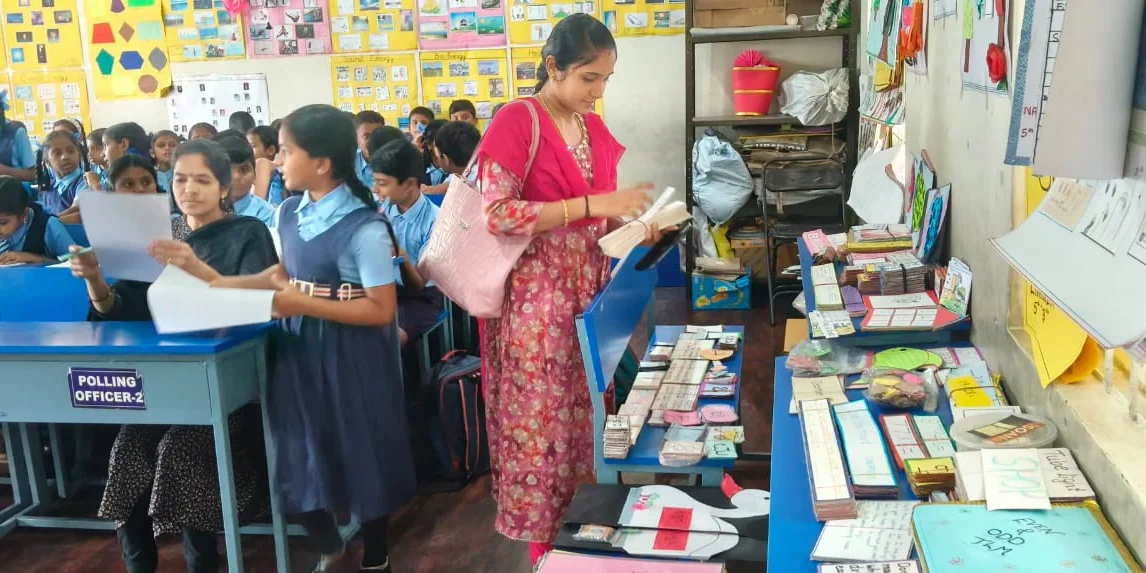
I recently asked a few of my friends what role their parents played in their education while they were growing up. Their answers were very different.
One of my friends told me that his parents’ role was mostly limited to paying his school fees. They were busy with farming and other work and did not have much time to follow what was happening in his or his sister’s education.
Another friend had a very different experience. Her parents were actively involved in her education. When she had a long break from school, they had already thought about what course she could take during the vacation. They encouraged her to study and kept looking for ways to keep her engaged with learning.
Neither story is simply about parents who cared and parents who did not. Families have different circumstances, responsibilities and amounts of time available to them. But both experiences made me think about what parental engagement actually means and how much of it a child needs.
As I thought about this, I was reminded of the 2018 Hindi film Helicopter Eela, directed by Pradeep Sarkar. The film follows Eela, a mother who is deeply involved in her son Vivan’s life. Her involvement comes from concern and love, but gradually extends into parts of his life where he wants more independence.
So what should parental engagement actually look like? And how can parents and schools make sure that involvement is useful to the child?
What Does Parental Engagement Actually Mean?
There is a good reason for parents to stay connected to their children’s education. A study of Indian children using data from the India Human Development Survey found an association between parental involvement during primary schooling and later school dropout. The study looked at activities such as attending parent-teacher meetings, discussing a child’s academic progress with teachers and supervising homework.
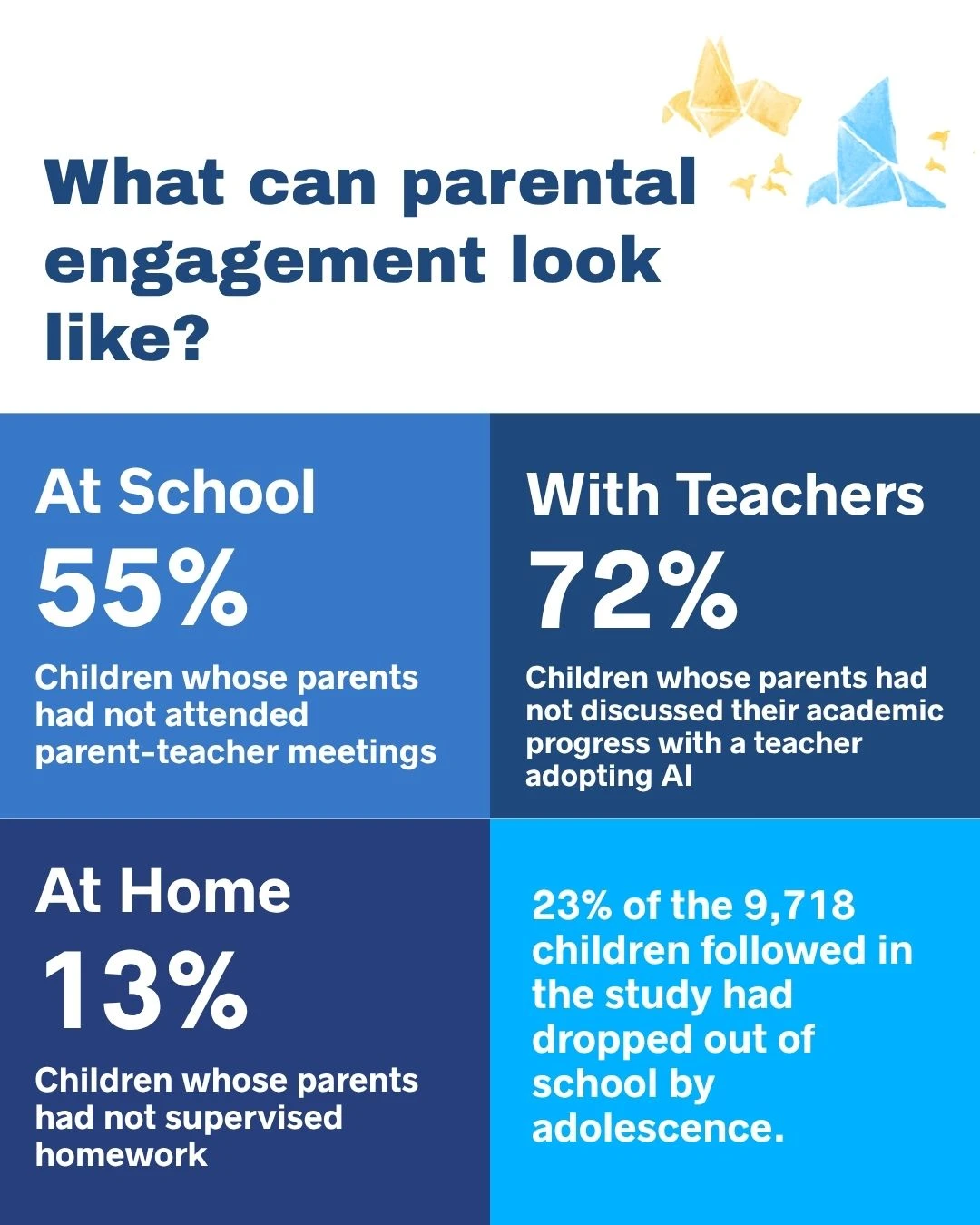
Source: PLOS ONE, “Does lack of parental involvement affect school dropout among Indian adolescents? Evidence from a panel study.”
Parental engagement can take different forms. It can happen through a parent attending a PTM, speaking with a teacher or supporting learning at home. But being involved does not mean doing all of these things all the time. What matters is staying connected enough to understand when a child needs support.
It does not always have to be academic. Not every parent can help with a difficult maths problem or explain every concept from a textbook. But a parent can ask about their child’s day, their friends, what they enjoyed at school or whether anything was difficult.
These conversations can help children talk about things they may otherwise keep to themselves. A child may be struggling with a subject but not know how to explain it to a teacher. They may be having a problem with a classmate. They may feel uncomfortable raising something at school themselves. A parent who knows what is happening can help the child think through the problem or, when necessary, communicate it to the teacher.
Schools Have a Role in Making This Possible
Parental engagement cannot be the responsibility of parents alone. Schools also need to create opportunities for parents to understand what their children are experiencing and participate in their learning.
Parent-teacher meetings are one such opportunity. They give teachers and parents a regular space to discuss a child’s learning, participation and areas where they may need support. Regular meetings also give parents more than one opportunity to connect with the school, which matters for families who may not be able to attend every meeting.
Data from Mantra4Change’s School Transformation and Education Programme (STEP) in Bengaluru gives us one example. In 2026, during the first parent teacher meeting (PTM), 628 out of 1,334 schools across Bengaluru South and North conducted PTMs, with 18,807 parents participating. By the second PTM, this increased to 781 schools, with 33,512 parents participating. That meant 153 more schools conducted the PTM, while parent participation increased by nearly 78%.
But participation is only one part of the story. What parents are able to take away from these meetings matters too.
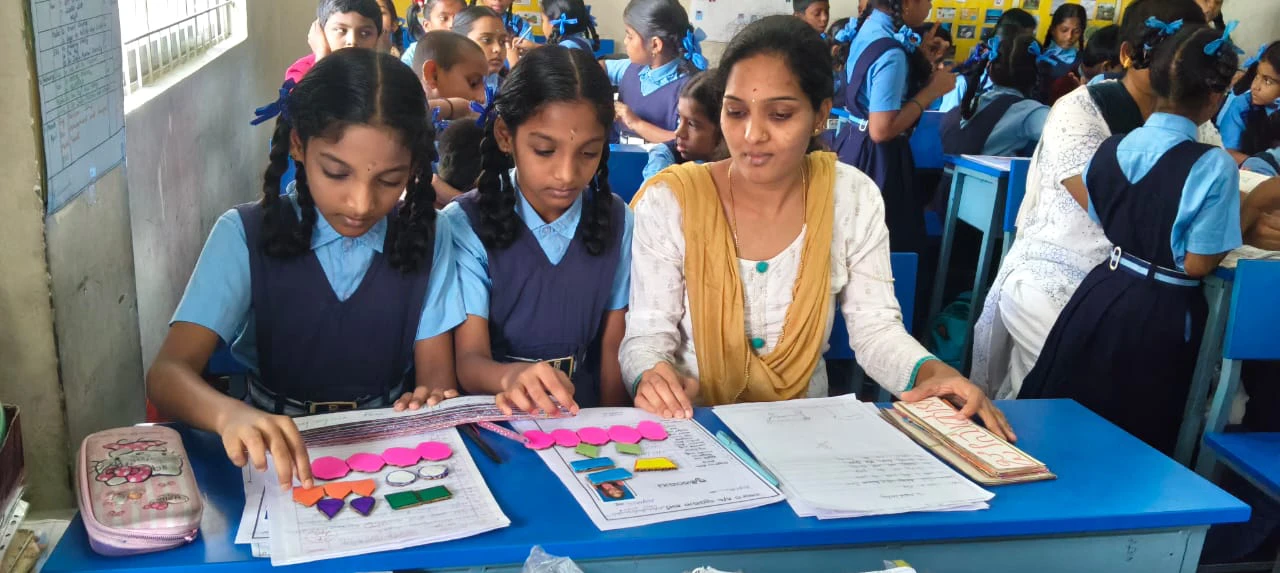
“Motivated by the guidance, I set up a dedicated learning space at home and prepared learning materials with the teacher’s support. I also started spending more time with my children during their academic routines.”
Chaitra, Parent, Government Model Primary School (GMPS) Kamala Nagara, Bengaluru North 1
Chaitra’s experience shows how a PTM can give parents practical ideas they can take into their homes. This also raises a larger question for schools: how can PTMs create opportunities for parents to participate, understand their child’s learning and feel more connected to the school?
At Mantra4Change, this is reflected in how parent-teacher meetings are conducted. Parents are invited to take part in activities and games, giving them a chance to experience the school environment and some of the learning approaches their children encounter.
The conversation can then move from “How many marks did you get?” to “What did you make? Tell me about it.” That shift can help parents see and engage with their child’s learning in a different way.
We have explored some of the barriers to parental involvement and how schools can respond to them in our earlier piece on education leadership and parental involvement.
When Does Parental Involvement Become Too Much?
Being involved in a child’s education does not mean being involved in every decision they make. As children grow, they also need opportunities to make choices, solve problems and learn from their mistakes.
This is where the difference between support and control becomes important.
In Helicopter Eela, Eela is deeply involved in Vivan’s life and eventually crosses the line into controlling parts of his college life and friendships. But she also comes to realise that her involvement is making it harder for him to have space of his own. By the end, she begins to step back and give Vivan more independence.
This is where child agency becomes important. Children need opportunities to have a say in decisions that affect them, take responsibility for their choices and gradually become more independent.
This can look different at different ages. A younger child may need a parent to sit with them while they complete their homework. An older child may need a parent who listens, asks questions and helps them think through a problem rather than solving it for them.
Sometimes, stepping in is necessary. A child may need an adult to intervene when they are facing bullying, a serious learning difficulty or a problem they cannot resolve on their own. At other times, stepping back can be equally important.
A useful question for parents could be:
Does my child need me to solve this, or do they need me to help them solve it?
Taking over → “Let me solve this for you.”
Supporting → “How can I help you figure this out?”
The difference may seem small, but it can determine how much space a child has to make decisions, try things independently and learn from their experiences. Parental engagement should support child agency, not replace it.
Being There Without Taking Over
There may not be one formula for parental engagement. A parent who has very little time because of work may find different ways to stay connected than a parent who can attend every school meeting. A younger child may need more direct support than a teenager.
What matters is that the parent stays connected to the child’s education, the school creates opportunities for that connection and the child has room to gradually take responsibility for their own learning.
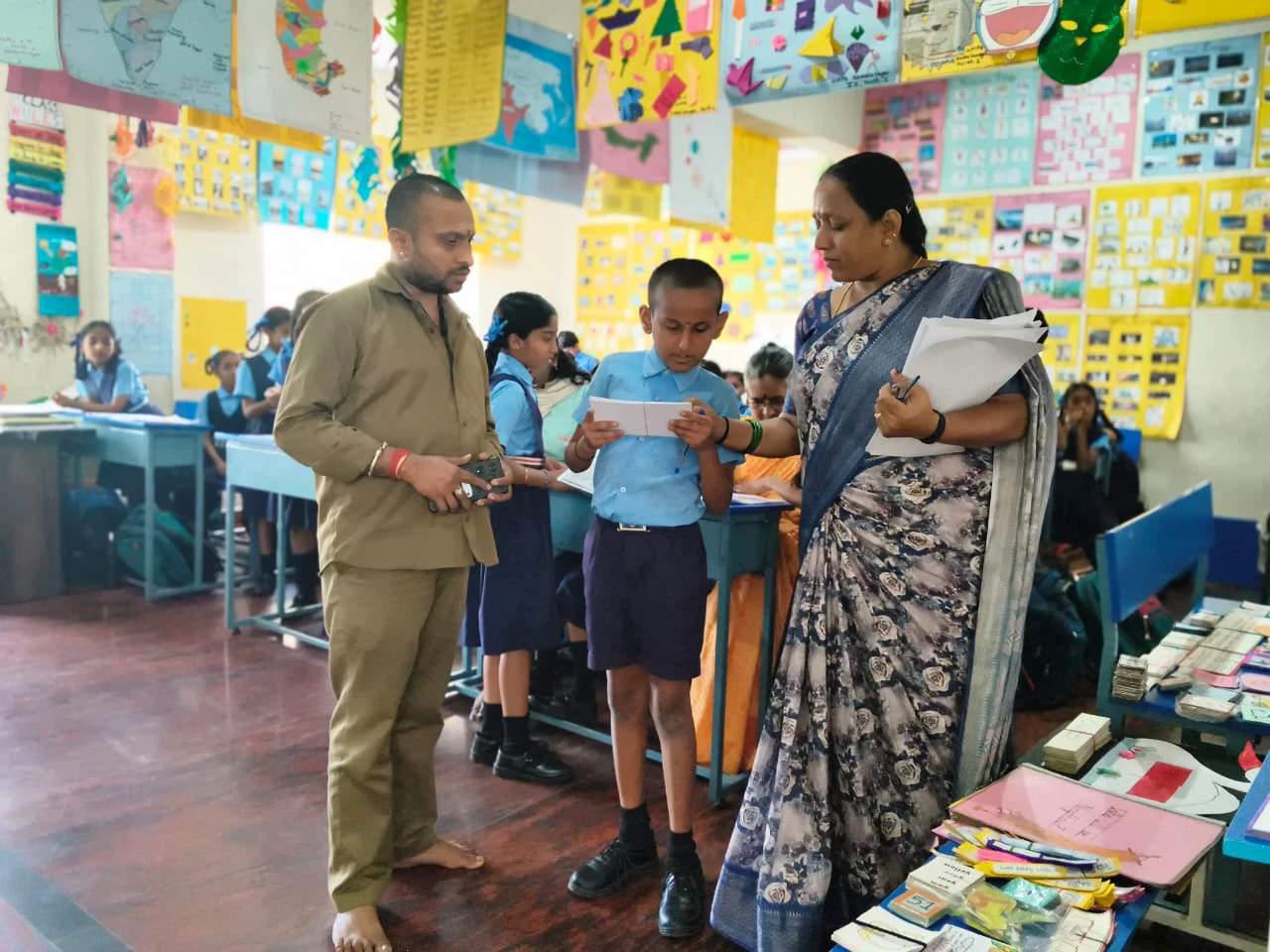
Being involved means knowing when your child needs you to step in, when they need you to listen, and when they need the space to figure something out for themselves.