

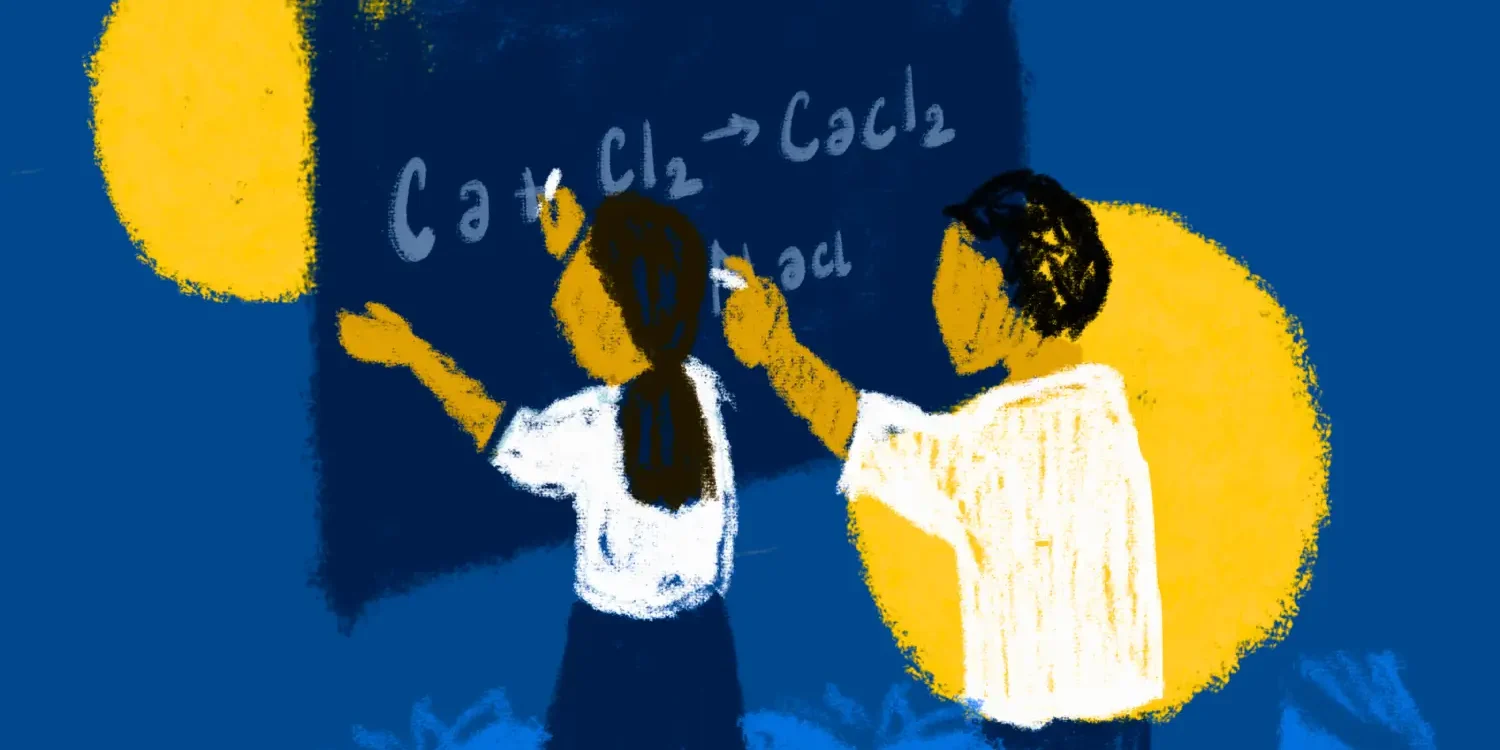
A student scores well in an exam. A week later, someone asks them to explain the same concept in their own words, and they go blank. The answer they’d memorised is just… gone.
If you’ve spent any time around Indian classrooms, this probably feels familiar. It is not a rare glitch, but a systemic pattern many schools quietly live with, year after year.
Beyond Access: Are Children Really Learning?
Over the last two decades, India has done something genuinely remarkable: it has gotten children into school. The latest UDISE+ and education data puts the numbers at over 24.7 crore students across 14.6 lakh schools, taught by over 1.03 crore teachers. That’s one of the largest schooling systems the world has ever tried to run.
But getting children into classrooms was only step one. The harder question is whether they’re actually learning once they’re there.
For years, educational success has been measured primarily through enrollment metrics and exam scores. However, the Ministry of Education’s National Achievement Survey (NAS) highlights a stark decline in core learning competencies, such as reading comprehension and mathematical problem-solving, as students progress to higher grades. Learning has effectively been replaced by memorisation. This is not due to a lack of effort from educators; teachers often recognize instinctively which students are falling behind. However, they remain burdened by administrative paperwork and rigid syllabus timelines, leaving them with little institutional autonomy to act.
Consequently, there is a growing need to address decentralisation within our education system. In this context, decentralisation means shifting daily instructional decision-making from centralized authorities directly to the educators in the classroom. While central bodies still determine final goals, teachers must be trusted to navigate the path. This gives them the professional flexibility to pause, adapt examples, or dedicate extra time to a concept based on their students’ immediate needs, rather than rushing through a standardized textbook script to meet a rigid deadline.

This shift is critical because a uniform framework cannot accommodate the profound diversity of Indian classrooms. A lesson that resonates with a student in an urban area may lack relevance for a child in a rural tribal belt; teachers require the autonomy to contextualize learning. Furthermore, as systemic goals transition from rote memorisation to critical problem-solving, classrooms must operate dynamically. Active, hands-on learning assumes greater importance, as children connect to it more.
So maybe the real question isn’t whether we need better teachers, but whether the system trusts the ones we already have enough to let them teach the children in front of them.
Why Decentralisation Matters
When we think about decentralisation, we usually think about big political shifts—moving power from capitals to states. In a classroom, however, it is much more personal. Decentralisation in education aims to shift agency and decision-making power directly to leaders at every level: from district, block, and cluster officers to headmasters and classroom teachers. This enables them to respond flexibly to their local context and needs.
In turn, this local autonomy transforms schools into spaces where learning is relatable, engaging, and joyful: nurturing natural curiosity instead of anxiety, so children look forward to learning rather than shying away from hard subjects.
Achieving this requires a simple change in how we treat our educators. No one is arguing for a complete lack of rules, as shared standards are important to keep quality fair for everyone. The problem happens when central systems try to standardise not just the final goals, but the exact ways teachers must talk and work with their students. Teachers know their craft, and they should have the freedom to practice their own way of teaching. When we trust educators to find their own creative path to a shared goal, we let them bring joy back into the classroom, proving that good results and a love for learning can go hand in hand.
When administrative control is tightly centralized and strict compliance leaves zero room for flexibility, it completely alters a child’s relationship with failure. In such a rigid system, there is only one approved way to solve a problem and one fixed timeline to do it. If a child does not grasp a concept on that exact day, they are immediately left behind. Because the teacher lacks the authority to pause or offer an alternative path, the child begins to view their natural learning pace as a personal defect, creating a deep sense of academic anxiety and self-doubt.

This strict control also teaches children a damaging lesson about compliance. When students notice that their own teacher has no power to make decisions, change examples, or voice an opinion, they realize the school prizes obedience over critical thought. Instead of learning how to think independently, challenge assumptions, and explore ideas, children adapt by becoming passive. They quickly learn that the safest path to success is to stay quiet, copy the board, and never ask questions, effectively crushing their natural sense of agency before they even enter the real world.
What It Means on the Ground
Policy can point a direction, but what happens in classrooms depends on the people carrying it out. India’s National Education Policy (NEP) 2020 speaks of experiential learning and flexibility, but the real impact depends entirely on school-level implementation. When teachers get room to use their judgment, classrooms shift from memorisation to active problem-solving. Students stop just repeating “correct” answers and start asking questions, working in groups, and testing ideas out loud.
Project-Based Learning (PBL) captures this perfectly by keeping the final goals common but handing the “how” back to the teacher. At Mantra4Change, we test this trade-off at scale by helping schools and state systems adopt experiential, practical models. Instead of dictating a rigid script, we focus on letting teachers experiment with different teaching methods, shifting their role from simple syllabus-deliverers into learning facilitators. This proves that loosening the grip on how something is taught does not mean losing sight of what gets learned.

However, this change cannot rest on individual teachers alone. It requires building deep alignment across all stakeholders in the education system. It needs headmasters who are willing to let their staff experiment, take risks, and reflect together. It means supporting Cluster Resource Persons (CRPs) and Block Resource Persons (BRPs) to act as mentors rather than inspectors, guiding schools instead of just checking compliance boxes. It also means connecting schools with their neighborhoods: including parents and School Development and Monitoring Committees (SDMCs); so that learning becomes a shared responsibility. This is why we design peer-support systems and collaborative spaces where nearby schools share resources and troubleshoot local challenges together. By activating every layer of these stakeholders, we turn the school ecosystem into a responsive network where education is no longer one teacher’s solitary weight to carry.
Where This Leaves Us
Decentralisation was never really about handing over power for its own sake. It’s about trust: teachers making the small, daily calls about how a child learns best; headmasters building space for teachers to grow; communities showing up as partners rather than spectators; children taking an active part in their own learning rather than just receiving it.
Reform doesn’t always start with a sweeping new policy. Sometimes it’s a teacher changing how she explains something because half the class looked lost, or a parent starting to show up at the school gate. None of it looks like much on its own; but over years, it adds up to classrooms where learning means more than remembering.

We at Mantra4Change are continuously learning and mapping pieces of this puzzle, school by school, district by district. The distance still to travel is real, and transforming learning spaces while truly empowering our teachers remains a complex work in progress. But maybe that’s the real meaning of decentralisation: not pulling decisions further from the classroom, but gently bringing them back to the people who understand the children in it best.
Because meaningful reform in education was probably never going to come from tighter control.
It begins with trust.