


A policy analysis of NITI Aayog’s 2026 school complex recommendations, and the formal authority still missing from them
India has largely solved the access problem in school education. Nearly 50% of school-going children attend one of over 10 lakh government-run schools, enrollment at the elementary stage is near universal,and basic infrastructure such as toilets, electricity, and teaching-learning materials are now in place in most schools (UDISE+, 20r5).
But what does the data actually tell us about what’s happening inside schools? A toilet counts as “available” whether or not it’s in a usable state. Electricity counts as “available” whether or not it is available consistently to power the digital devices for classrooms distributed by the department. And despite near-universal enrolment, learning outcomes show a declining trend across school stages over the past two decades, with real but uneven gains at the foundational level that thin out as children move up grades (ASER, 2005; 2024; PARAKH, 2024).
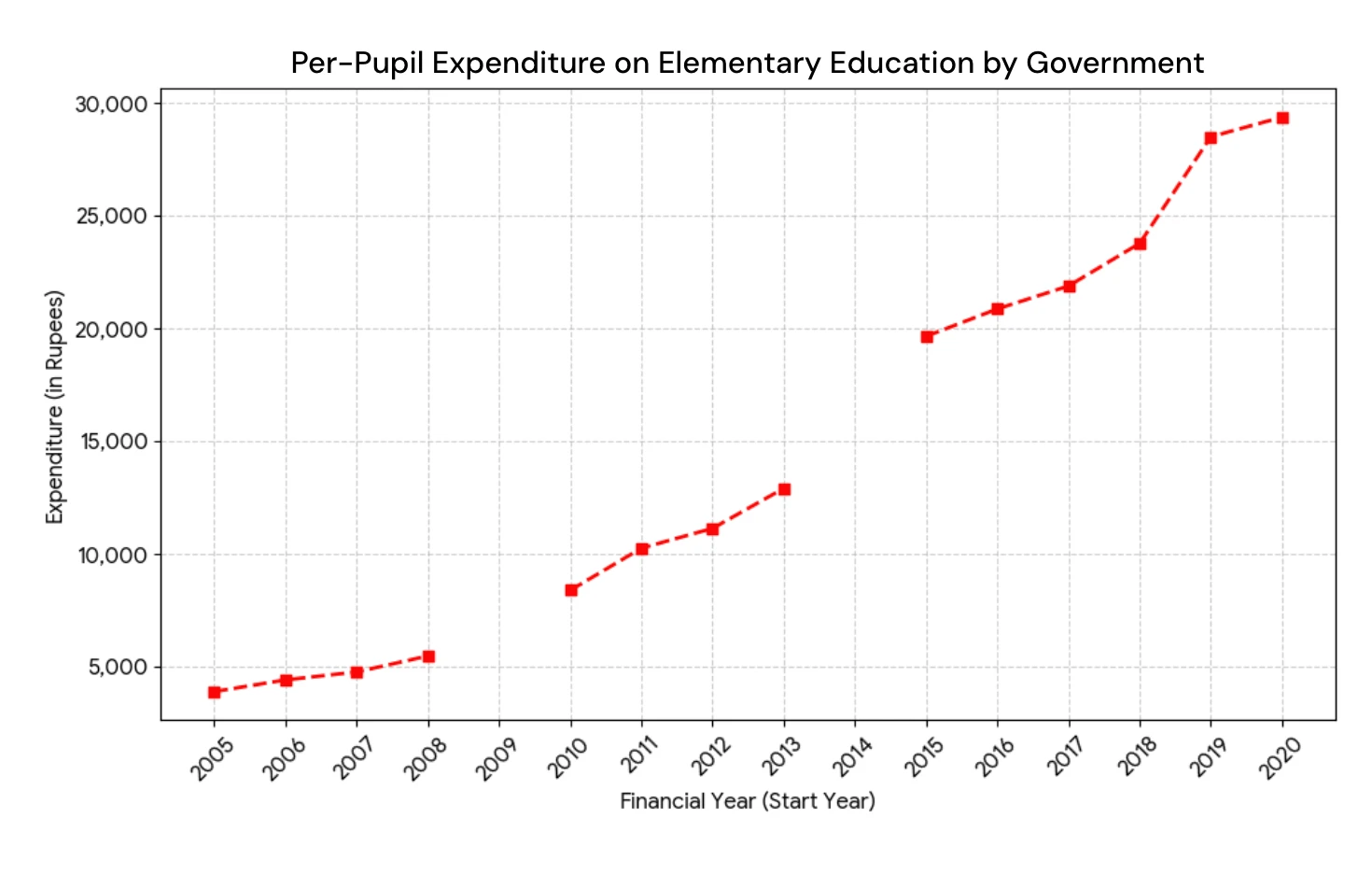
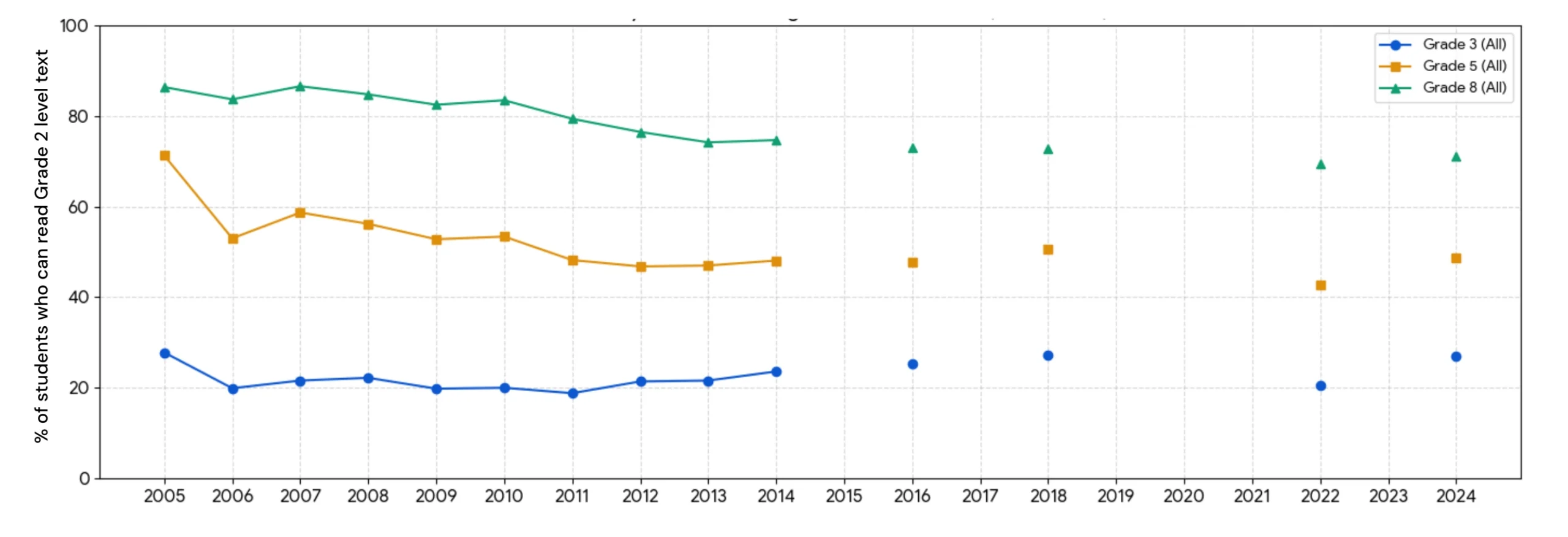
Figure 1: Rising Per Pupil Expenditure and Declining Learning Outcomes (time series analysis based on ASER, UDISE+, Analysis of Budget Expenditure, Ministry of Education)
This isn’t merely a pattern of implementation failures. It is the result of a structural gap between the provision of policy inputs and the effectiveness of structures and processes needed to deliver the desired outcomes in reality. Over the past two decades, India has invested heavily in school infrastructure, personnel, and national missions such as NIPUN Bharat. Their impact depends on local, last-mile implementation, yet key operational and administrative decisions remain centralized, limiting the ability of schools and mid-tier officials to respond effectively (Muralidharan, 2024).
This is the structural gap that NITI Aayog’s 2026 report titled SCHOOL EDUCATION SYSTEM IN INDIA: Temporal Analysis and Policy Roadmap for Quality Enhancements highlights: while education policies and programmes are well designed, insufficient attention has been paid to how governance is organized, how systems respond to local challenges,and how implementation is sustained at the last mile.
What NITI Aayog gets right- and where it falls short
NITI Aayog’s response to this governance gap is to reposition school complexes as the unit for implementation, resource sharing and service delivery, supported by district-level task forces and stronger School Management Committees (SMCs). This is a real shift: it moves the conversation from inputs to governance, and recognises that local institutions, not one-size-fits-all state schemes, are best placed to solve local problems.
However, while the report clearly advocates for decentralized implementation and coordination, it stops short of proposing substantial devolution of authority over finance, personnel, or policy decisions. It mentions “enhanced local autonomy,” ”align deployment & funding with school complex structures”, school complex-wise tracking and stronger SMCs in the language of improved coordination, not a formal transfer of decision-making power. Local actors are positioned to implement, adapt and collaborate, while the consequential decisions over staffing, budgets, and policy remain with state and district bureaucracies.
Cluster Resource Centres (CRCs) and Block Resource Centres (BRCs), established under the Sarva Shiksha Abhiyan (SSA) in 2001 to strengthen local academic support, already coordinate groups of schools, support teachers and facilitate resource sharing, much of what NITI Aayog envisions for school complexes– except that it operates entirely on facilitation and coordination rather than formal authority.
What "formal authority" actually means and why this matters
Formal authority is the legally or procedurally grounded power of a local body to make binding decisions over staffing, budgets, and operations- and to be held accountable for the outcomes- rather than implementing, coordinating and monitoring pre-defined structures and processes.
The distinction matters because, as Brinkerhoff (2004) argues, accountability requires both answerability and enforceability- the ability to explain a decision, and the power to act on it [3]. A body that can only report a practice or a problem has answerability without enforceability- the power to change a practice or address a problem.
India’s own reform history reinforces this lesson. Both the District Primary Education Programme (DPEP) 1994 and Nagaland’s Communitisation Act 2001 sought to strengthen local community-based governance through Village Education Committees (VEC), but with markedly different results. VEC under DPEP was officially constituted to monitor quality of schooling, including presence of teachers,, but had no influence over any consequences, thus limiting its impact (Banerjee et. el., 2020; Reddy, M. G., & Bhavani, G., 2012). In contrast, Nagaland’s Communitisation Act gave VECs statutory authority over teacher attendance and salary disbursement, creating active local accountability and improving teacher attendance. The difference here is the nature of accountability: VECs were responsible for teacher attendance and could enforce it through consequences.
So what can a School Complex with formal authority look like?
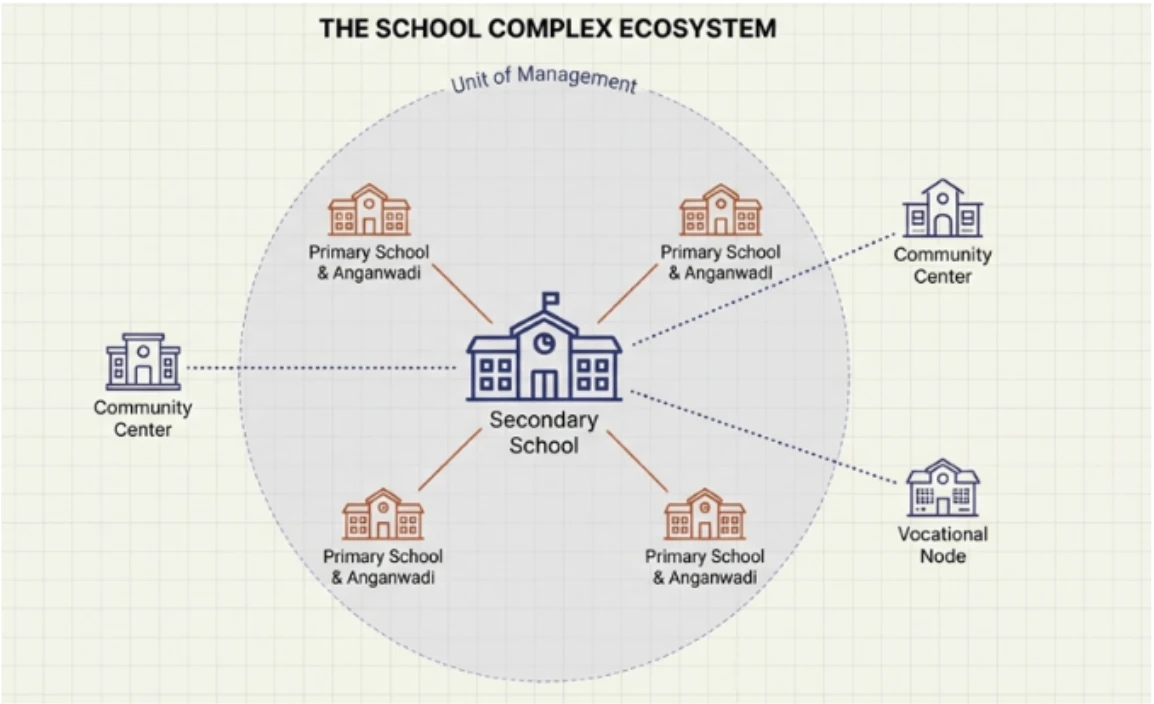
Figure 2: The Local School Complex Ecosystem
NEP 2020 and NITI Aayog report recommend a range of responsibilities, ways of organizing and working for School Complexes. But a closer analysis reveals that these remain largely implementation and coordination roles. A complex can collect data on a staffing gap, but can’t act on it. It can conduct a review, but can’t disburse the budget that review recommends. It can prepare a school complex development plan, but has no guarantee that plan returns as an actionable input from the state. The design of formal authority therefore enables a smaller, sharper set of decisions that strengthen the responsibilities that exist.
Five domains carry strong evidence for formal authority in School Complexes, because each is a point where distance from the decision is what produces the access-quality gap.
Staffing and personnel management. Teacher shortages could often coexist with teacher surpluses, but transfers stay tied to district or state approval. A complex that can see this gap in real time should be able to reallocate teachers locally and verify performance, and take actions to address any shortcomings. Evidence from India shows that teacher performance is influenced more by local accountability– inspections, working infrastructure, someone nearby who notices– than increased salaries (Kremer et.al., 2005; Muralidharan, 2024).
Budgets and maintenance. Routine inputs such as broken water lines or missing teaching materials can take months to fix because spending travels through multiple administrative layers. Untied funds or formula-based grants, held directly by the complex, fix that timeline– with public disclosure of expenditure built in. The principle underlying this: the institution closest to the problem is best suited to solve it.
Academic quality. Complexes already monitor and review learning outcomes– what they lack is authority to act on what they find. Linking assessment data to control over staffing and budget means that a poor result triggers a local and relevant response, and does not only stay on the dashboard. This is the lesson from Vidya Samiksha Kendra experiments in Gujarat: real-time visibility into school performance must be matched by local capacity, decision-making and action. Formal authority to respond to the data gaps at the local level can enable relevant interventions at the right time.
Professional Development. Professional development and learning is most effective when it is embedded in a shared context than delivered top-down. Complexes can own their own learning to build local capacity within the group- more resilient than a thin, overstretched cadre of external mentors, a lesson from UP’s Mission Prerna, where Academic Resource Persons were the right structure, but their reach varied widely and many continued to engage with administrative tasks.
Community accountability. Finally, to sustain quality in improvements, community oversight must be a built-in design of the School Complex. Budgets, decisions and meeting records should be publicly accessible, with elected representatives from SMCs and PRIs participating as decision-makers rather than advisors. Janagrahaa’s MyCityMyBudget initiative demonstrates that participation alone does not create accountability; transparent processes backed by decision-making authority can.
None of this calls for unfettered local control: it requires clear standards, safeguards against elite capture, and continued state oversight of outcomes. But the design question facing India isn’t whether to devolve this authority. It’s how to phase it responsibly enough that school complexes become governing institutions- not just better coordination platforms.

Figure 3: A Phased Approach to Decentralizing Formal Authority
With this phased approach in mind, Mantra4Change’s work focuses on building the conditions that can make decentralization work. Program design and implementation outcomes target the capacity of district, block and cluster leaders to diagnose local challenges, use data and continuously lead improvement. Through training, peer learning, mentoring structures, collaborative visioning and review, and building trust, interventions attempt to embed capacity and routines for leadership at all levels of the system. These efforts prepare institutions to exercise greater authority responsibly. However, historical experience demonstrates that while building capacity and supportive conditions is necessary, it remains insufficient to sustain improvements at the last-mile. This points to the next step in decentralization: complementing local capability with greater formal decision-making authority that shapes school improvements.

AI Disclaimer: Gemini AI has been leveraged to generate graphs and images.
References
NITI Aayog. (2026). School education system in India: Temporal analysis and policy roadmap for quality enhancement. Education Division, NITI Aayog. https://www.niti.gov.in/sites/default/files/2026-05/School-Education-System-in-India.pdf
Muralidharan, K. (2024). Accelerating India’s development: A state-led roadmap for effective governance. Penguin Random House India.
Brinkerhoff, D. W. (2004). Accountability and health systems: Toward conceptual clarity and policy relevance. Health Policy and Planning, 19(6), 371–379. https://doi.org/10.1093/heapol/czh052
Banerjee, A. V., Banerji, R., Duflo, E., Glennerster, R., & Khemani, S. (2010). Pitfalls of participatory programs: Evidence from a randomized evaluation in education in India. American Economic Journal: Economic Policy, 2(1), 1–30.
Reddy, M. G., & Bhavani, G. (2012). Community Participation in Educational Administration in Andhra Pradesh—Rhetoric or Real? Journal of Educational Planning and Administration.
Kremer, Michael, Nazmul Chaudhury, F. Halsey Rogers, Karthik Muralidharan, and Jeffrey Hammer. “Teacher Absence in India: A Snapshot.” Journal of the European Economic Association 3, no. 2–3 (2005): 658–667. https://academic.oup.com/jeea/article-abstract/3/2-3/658/2281517